Know before you go
About Manaslu Region
The Manaslu Region is one of Nepal’s most distinctive Himalayan trekking areas, combining dramatic mountain scenery, deep river valleys, remote settlements and strong cultural traditions within the landscapes surrounding Mount Manaslu (8,163 m). Located in northern Gorkha, between the better-known Annapurna and Langtang areas, the region offers a journey that feels progressively more remote as the trail moves from Nepal’s middle hills toward the high Himalaya and the Tibetan frontier.
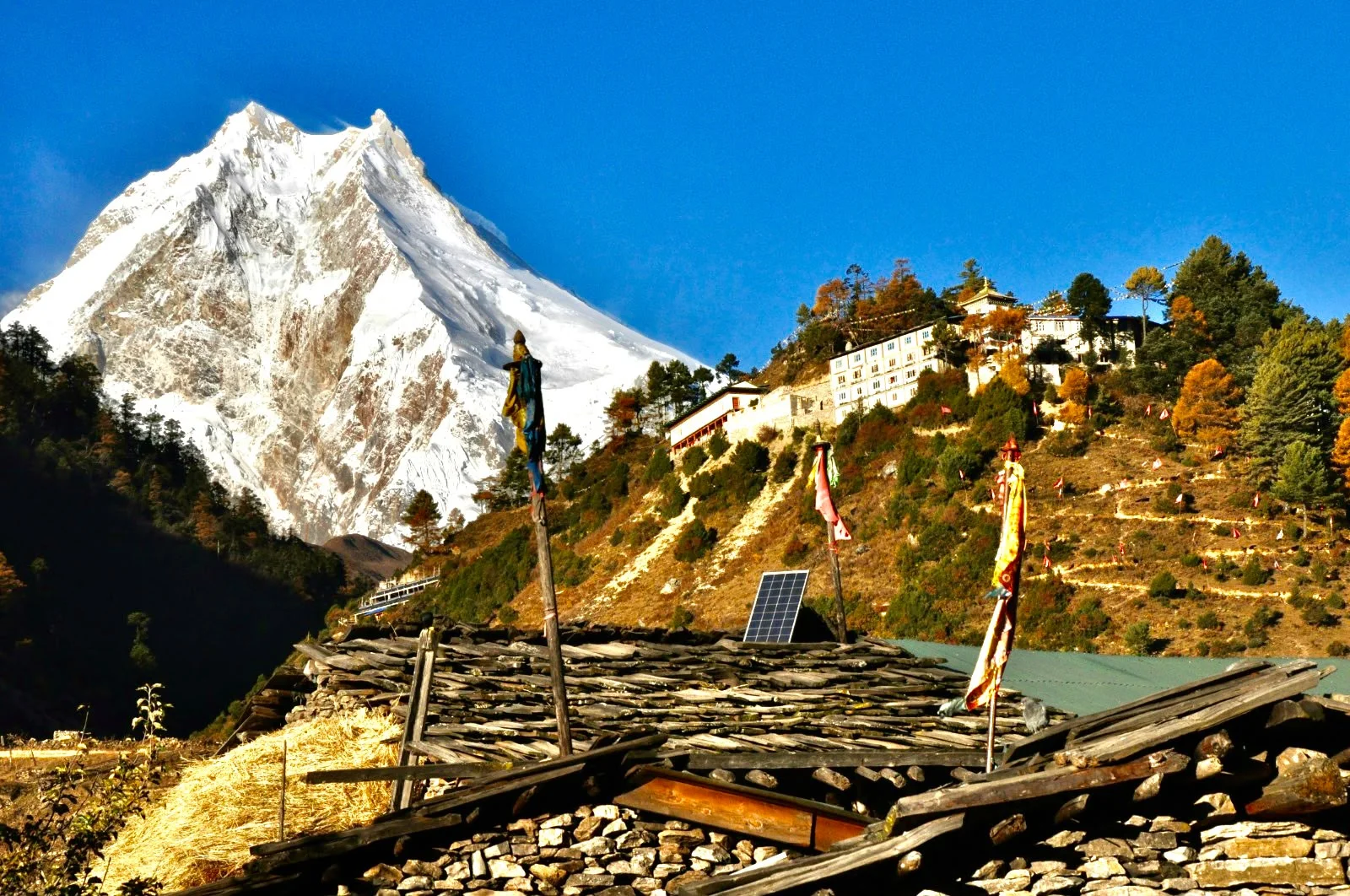
Mount Manaslu dominates the identity of the region. At 8,163 metres, it is the eighth-highest mountain in the world and one of Nepal’s major 8,000-metre peaks. The mountain was first successfully climbed in 1956 by a Japanese expedition and has maintained an important connection with Japanese mountaineering history. Yet for trekkers, Manaslu is not simply a mountain to observe from a distance. The landscape surrounding it creates an entire trekking region of valleys, forests, villages, monasteries, glaciers and high mountain passes.
The classic journey through the region follows the Budhi Gandaki Valley. The river provides a natural corridor from the lower hills toward the high mountains, and much of the Manaslu Circuit develops around this gradual northward progression. During the early stages of the journey, trekkers encounter warmer valleys, cultivated terraces, forested hillsides and settlements connected by trails that have served local communities for generations.
As the route climbs farther into the mountains, the character of the landscape begins to change. Valleys narrow beneath steep mountain walls, vegetation changes with elevation and Himalayan peaks become increasingly prominent. This gradual transformation is one of the qualities that makes Manaslu especially rewarding: the high mountains are not reached immediately but revealed over several days of walking.
Much of the upper region lies within the Manaslu Conservation Area, a protected landscape covering approximately 1,663 square kilometres. The conservation area was established in 1998 and includes environments ranging from lower forested valleys to alpine and high-Himalayan terrain.
The protected area is also important for Himalayan biodiversity. Its varied elevations provide habitat for numerous plant, bird and mammal species, including wildlife adapted to remote mountain environments. The natural landscape, however, cannot be separated from the communities living within it. Conservation in Manaslu exists alongside settlements where agriculture, livestock, trade, religion and traditional ways of life continue to shape the region.
Cultural change becomes particularly noticeable as trekkers enter the upper valleys. Tibetan-influenced Buddhist traditions are visible through monasteries, chortens, mani walls, prayer wheels and prayer flags found along the trail. Architecture and settlement patterns also begin to reflect the region’s close historical and cultural relationship with the Tibetan plateau.
Places such as Namrung, Lho and Samagaun are among the settlements encountered on journeys through the upper Budhi Gandaki Valley. Rather than functioning only as overnight stops, these villages provide important context for understanding Manaslu. Travellers move through communities where mountain life continues beyond tourism, and the cultural landscape becomes as significant as the surrounding peaks.
Samagaun is particularly important on many Manaslu Circuit itineraries. Situated beneath the high mountains, it commonly serves as an acclimatization point before travellers continue toward more demanding elevations. Spending additional time here can allow trekkers to explore the surrounding landscape while their bodies gradually adjust to altitude.
This approach reflects an important characteristic of trekking in Manaslu: the journey should not be rushed. Although road development has shortened access to some lower sections, the upper route still requires substantial altitude gain. A carefully paced itinerary provides time for acclimatization while also allowing travellers to experience the changing landscapes and communities rather than treating every day simply as progress toward Larkya La.
The Manaslu Circuit is the region’s best-known trekking route. Unlike a trek that follows one valley to a destination and returns the same way, the circuit travels around the Manaslu massif. This gives the journey a strong sense of geographical progression, with new valleys, mountain perspectives and cultural landscapes appearing as the route develops.
One of the defining challenges is Larkya La, the high Himalayan pass crossed during the circuit. Rising above 5,000 metres, the pass represents the transition between the upper Manaslu valleys and the western side of the mountains. Snow, wind, cold temperatures and rapidly changing weather can make the crossing demanding, so the approach requires appropriate acclimatization and flexibility.
Yet Larkya La should not become the only reason for travelling through Manaslu. The days leading toward the pass form much of the actual experience. Following the Budhi Gandaki, walking between villages, crossing forested landscapes and gradually entering increasingly alpine terrain gives the journey its character long before the highest point is reached.
After crossing the pass, the trail descends toward Bhimtang and eventually connects with the Marsyangdi side of the Himalaya. This brings trekkers toward the wider Annapurna trail and road network. The classic circuit therefore creates a genuine passage through the mountains rather than simply returning along the route used to enter.
Another important part of the wider Manaslu Region is Tsum Valley. Located northeast of the main circuit corridor, Tsum has its own geographical and cultural identity. The valley is known for its Buddhist heritage, traditional settlements and close historical connections with Tibetan culture.
A journey into Tsum Valley can be undertaken as a significant trekking experience in its own right or incorporated into a longer Manaslu itinerary. Combining Tsum Valley with the Manaslu Circuit creates a considerably longer journey, but it also allows travellers to explore the cultural landscapes of the region more deeply.
For the HTV website, this distinction is important. Manaslu Region is the parent destination, while journeys such as the Manaslu Circuit and Tsum Valley will later receive their own detailed trip or place content. This allows the regional page to explain Manaslu as a whole without competing with the individual trekking pages beneath it.
The region also differs from many mainstream trekking areas because parts of Manaslu fall within a restricted trekking area. Special regulations apply to designated sections, and travellers must follow the current permit and trekking requirements established by Nepalese authorities. This has helped shape the way tourism operates within the region and means Manaslu journeys generally require more preparation than simply arriving independently at a trailhead.
Although Manaslu is frequently described as an alternative to the Annapurna Circuit, that comparison does not fully explain the region. Manaslu has its own geography, communities, conservation landscape and cultural history. It deserves to be understood as a Himalayan destination in its own right rather than merely as a quieter substitute for another trek.
At the same time, it would be misleading to describe Manaslu as completely untouched. Trekking infrastructure has developed considerably along the established circuit. Tea houses and lodges operate through much of the route, road access has changed parts of the lower valley, and international awareness of the trek has grown.
What remains distinctive is the balance between infrastructure and remoteness. Travellers can undertake an organised lodge-based trek while still experiencing long mountain valleys, culturally significant settlements and high-altitude terrain that feels considerably removed from Nepal’s urban centres.
The Manaslu Region is particularly suited to travellers who want a longer and more immersive Himalayan journey. Rather than concentrating several famous attractions into a short itinerary, the region rewards patience. Its character emerges gradually through the transition from lower river valleys to Buddhist mountain communities and eventually to exposed high-altitude landscapes.
This progression also creates opportunities for meaningful cultural encounters. Mani walls, monasteries and prayer flags are not isolated attractions added to a sightseeing list; they form part of the lived environment through which travellers walk. Respecting local customs, religious sites and community life is therefore an important part of travelling responsibly through Manaslu.
For Himalayan Trek Ventures, this is precisely the kind of region where thoughtful itinerary design matters. Acclimatization should be treated as part of the experience rather than an inconvenience. Village stays should provide time to understand where travellers are walking. And the route should preserve worthwhile trekking sections instead of automatically shortening the journey whenever road access expands.
Manaslu can also appeal to travellers who have previously trekked elsewhere in Nepal and are looking for something different. Its combination of a major 8,000-metre mountain, restricted-area trekking, Tibetan-influenced communities, conservation landscapes and a high Himalayan pass gives the region a character that is difficult to reproduce elsewhere.
Ultimately, Mount Manaslu may give the region its name, but the mountain alone does not define the journey. The Budhi Gandaki, the villages of the upper valleys, Buddhist heritage, protected landscapes, Tsum Valley and the crossing of Larkya La all contribute to the experience.
Travelling through Manaslu is therefore less about reaching one famous destination and more about witnessing the Himalaya change around you over time. From cultivated lower valleys to remote settlements beneath enormous mountains and finally the exposed terrain of a high pass, the region creates a journey in which landscape, culture, altitude and distance remain closely connected.
That combination makes the Manaslu Region one of Nepal’s most compelling destinations for travellers who want to experience the Himalayas at a slower, more thoughtful pace.