
Know before you go
About Makalu Region
Makalu Region → Editorial Content → Overview
The Makalu Region is one of Nepal’s most remote and ecologically remarkable Himalayan destinations. Located in eastern Nepal, close to the international border with Tibet, the region is dominated by Mount Makalu (8,485 m), the world’s fifth-highest mountain. Yet Makalu is much more than a destination for viewing an 8,000-metre peak. Its trekking routes travel through deep river valleys, culturally diverse villages, dense forests, alpine meadows and glacial landscapes before reaching the immense mountain amphitheatre surrounding Makalu Base Camp.
Compared with Everest or Annapurna, the Makalu Region receives considerably fewer trekkers. Its longer approach, demanding terrain and limited tourism infrastructure create a journey that feels distinctly different from Nepal’s mainstream trekking corridors. For travellers prepared for sustained walking and simpler facilities, this remoteness is one of the region’s greatest strengths.
Mount Makalu and the Eastern Himalaya
At the geographical heart of the region stands Mount Makalu, rising to 8,485 metres. Its distinctive pyramid-like profile makes it one of the most recognizable high mountains of the Himalaya.
Makalu lies southeast of Mount Everest, within a vast high-mountain landscape containing glaciers, ridges and several major Himalayan peaks. The mountain was first successfully climbed in 1955 by a French expedition, adding Makalu to the early history of 8,000-metre mountaineering.
For trekkers, however, the mountain reveals itself gradually.
Unlike routes where the primary peak dominates the skyline from the beginning, the approach to Makalu passes through several ecological zones before entering the high Barun Valley. The changing environment gives the journey a strong sense of progression and makes reaching Makalu Base Camp feel like the culmination of a much larger Himalayan experience.
Makalu Barun National Park
Much of the trekking region lies within Makalu Barun National Park, one of Nepal’s most important protected Himalayan landscapes.
The park is remarkable for its enormous variation in elevation. Landscapes transition from lower river valleys and subtropical environments through temperate forests and alpine ecosystems to glaciers and some of the highest mountains on Earth.
This dramatic vertical range creates exceptional biodiversity.
Forests can contain rhododendron, fir and other Himalayan vegetation, while the wider protected landscape provides habitat for numerous mammals, birds and plant species. Wildlife associated with the region includes species such as the red panda, snow leopard, musk deer and Himalayan tahr, although sightings of rare wildlife should never be guaranteed to trekkers.
The conservation landscape is therefore an important part of Makalu’s identity. Travelling here is not simply a journey toward a mountain—it is movement through one of Nepal’s most dramatic transitions between lowland ecosystems and extreme high-altitude environments.
The Barun Valley
One of the defining geographical features of the region is the Barun Valley.
As trekkers progress toward Makalu Base Camp, the Barun River and its surrounding valley lead them increasingly deeper into the high Himalaya. The environment gradually changes from forested landscapes to open alpine terrain, rocky valleys and glacial scenery.
The valley is particularly impressive because of the enormous mountains rising around it. Rather than providing only distant panoramic views, the upper Barun places travellers within a dramatic enclosed Himalayan landscape.
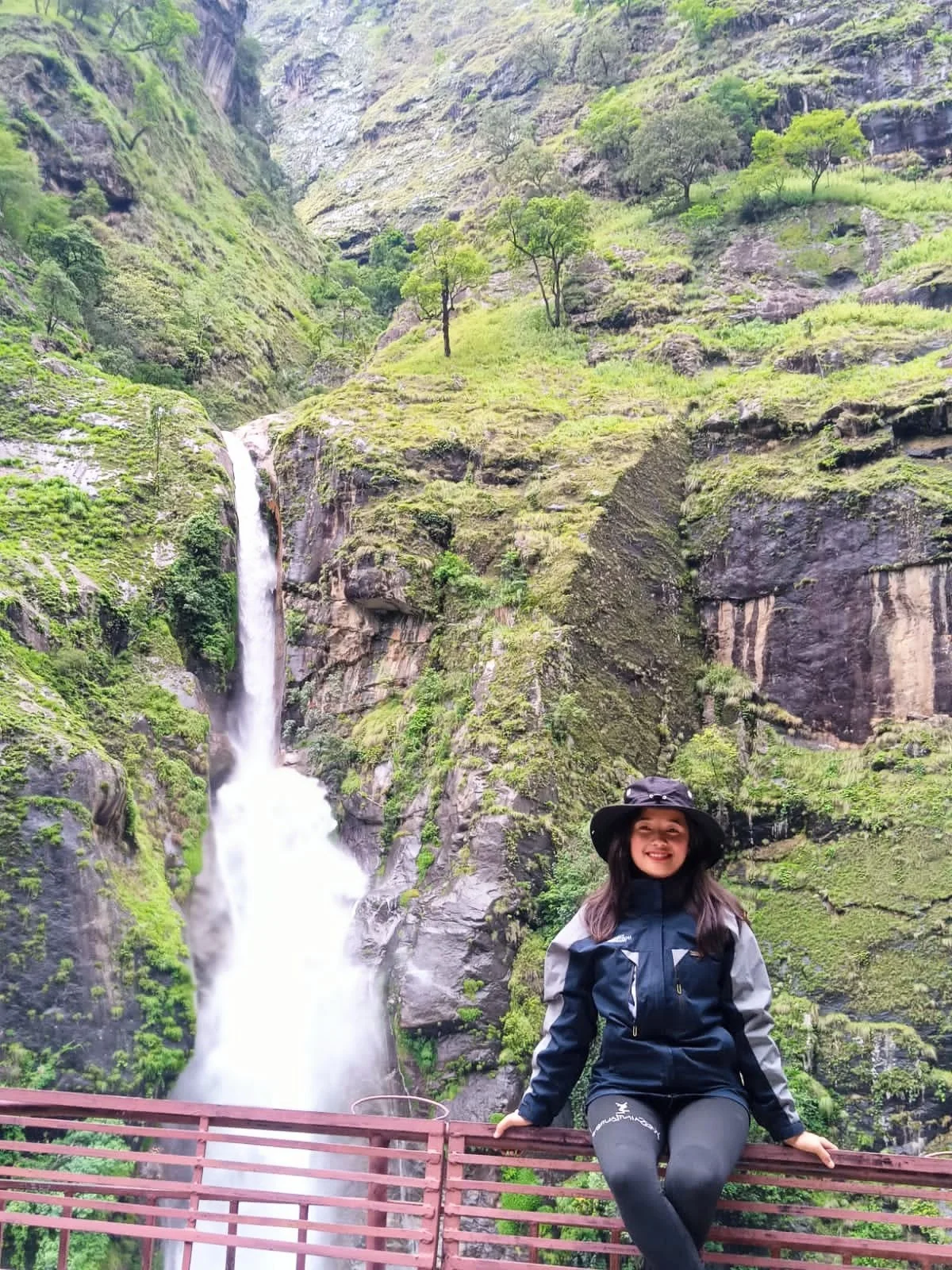
Waterfalls, cliffs, rivers, alpine vegetation and towering mountain walls contribute to an environment that feels increasingly wild as the route climbs.
The Barun Valley also helps distinguish Makalu from neighbouring Everest. Although the two regions occupy the same broad eastern Himalayan system, their trekking experiences are very different.
Everest has an extensive network of famous villages and developed trekking lodges. Makalu retains a more isolated character, with fewer visitors and considerably simpler infrastructure.
From Villages to Wilderness
The lower approaches to Makalu pass through inhabited landscapes before the route enters increasingly remote mountain terrain.
Communities in the wider region include Rai, Sherpa and other eastern Nepali groups, contributing to a culturally diverse trekking experience. Agriculture, livestock and local trade remain important elements of life in many settlements.
This human geography matters because the Makalu trek should not be marketed simply as a journey into an empty wilderness.
The landscape may become extremely remote at higher elevations, but the approach passes through communities whose trails, fields and settlements form part of the wider regional story.
As travellers climb, villages become more widely separated and tourism facilities become simpler. The transition from inhabited valleys into high-altitude wilderness is one of the defining experiences of the journey.
High Passes on the Approach
One of the most demanding parts of the classic Makalu Base Camp approach is the sequence of high terrain encountered before entering the upper Barun Valley.
Routes commonly cross the Shipton La area, named in association with British mountaineer and explorer Eric Shipton. Depending on the precise route description, trekkers may encounter several passes and high points across this section.
The crossings can be physically demanding because they involve repeated climbing and descending rather than a single continuous ascent.
Snow, ice, fog and rapidly changing weather can make the area considerably more difficult.
This section illustrates an important characteristic of Makalu trekking: the challenge comes not only from the maximum altitude at Base Camp but also from the accumulated effort required to reach it.
Travellers should therefore arrive prepared for sustained mountain walking rather than focusing only on the final elevation.
Makalu Base Camp
The principal trekking objective is Makalu Base Camp, situated deep within the high Himalayan environment beneath the Makalu massif.
By the time travellers reach the base-camp area, the landscape has changed dramatically from the greener environments encountered earlier in the journey.
Glacial terrain, moraine, exposed rock and enormous mountain walls dominate the surroundings.
Makalu itself becomes the central feature, but the wider panorama contains several spectacular Himalayan peaks and ridges. Depending on the exact viewpoint and conditions, trekkers can experience remarkable perspectives across the high mountains of eastern Nepal.
Reaching Base Camp is therefore not simply about standing at a particular coordinate.
The experience comes from the many days required to reach this remote valley and the contrast between the lower landscapes and the extreme environment at the end of the route.
A Trek That Rewards Time
Makalu is particularly suited to travellers who do not want to rush.
The approach is long, the terrain is demanding and proper acclimatization is essential. Trying to compress the journey too aggressively can undermine both safety and the experience itself.
At Himalayan Trek Ventures, Makalu itineraries should reflect thoughtful pacing.
Acclimatization needs to be incorporated naturally into the journey, especially as travellers move into the upper Barun Valley and toward Base Camp.
Rest days can also provide useful flexibility when weather affects the high passes or transportation connections.
This matters because Makalu is not a destination where every disruption can be solved with a road transfer. Once deep within the region, alternatives become limited.
Simple Infrastructure and Remote Travel
Trekking infrastructure has developed along the Makalu Base Camp route, and local lodges or teahouses can be available in a number of settlements.
However, travellers should not expect the same level of accommodation, menus, communications or convenience found along Nepal’s busiest trekking routes.
Facilities can be basic, particularly in remote sections.
This should be communicated as part of the nature of the journey rather than presented negatively. Travelling through Makalu requires adaptability and a willingness to accept simpler mountain conditions.
Depending on the exact route and current infrastructure, additional logistical support may be useful or necessary.
Weather and Seasonal Character
The Makalu Region is strongly influenced by Nepal’s Himalayan climate.
Spring and autumn provide the principal trekking seasons. Spring brings changing vegetation and flowering forests at lower elevations, while autumn often provides clearer conditions following the monsoon.
The summer monsoon can bring heavy rainfall to lower sections, increasing the risk of muddy trails, landslides and transportation disruption.
Winter can produce severe cold and snow across the high passes and upper valley.
Even during the main trekking seasons, weather at altitude can change quickly.
For Makalu, this is particularly important around the high passes on the approach, where fresh snow or poor visibility can significantly affect travel.
Conservation and Responsible Trekking
The remoteness of Makalu makes responsible tourism especially important.
Waste-management infrastructure is limited in mountain settlements, and trekking groups should minimise unnecessary packaging and manage non-biodegradable rubbish carefully.
Water sources should be protected, and trekkers should avoid leaving waste at camps, lodges or rest areas.
The region’s biodiversity also deserves respect. Wildlife should be observed without disturbance, and trekking groups should remain on established routes where appropriate rather than damaging fragile alpine vegetation.
Supporting locally operated lodges and purchasing local services where practical can help tourism contribute to communities along the route.
Respectful interaction is equally important. Travellers should ask before photographing people and follow local guidance around homes, religious places and community spaces.
Makalu Within the HTV Destination Structure
For Himalayan Trek Ventures, Makalu Region should serve as the parent destination page.
Its role is to explain the broader geography, protected environment, culture and character of trekking in the region.
Important geographic locations such as Barun Valley and Makalu Base Camp can later be developed as Places where useful, while the Makalu Base Camp Trek should have its own dedicated Trip page.
The Trip page can then focus on the exact itinerary, daily elevations, accommodation, inclusions, permits, difficulty and departure logistics without duplicating this regional overview.
This structure also gives HTV room to develop future journeys in the wider Makalu area without making the destination synonymous with only one itinerary.
The Character of a Makalu Journey
What makes Makalu exceptional is not simply the presence of the world’s fifth-highest mountain.
It is the journey between dramatically different Himalayan environments.
Travellers begin among villages, farms and forested hills. The trail climbs through increasingly remote landscapes and across demanding high terrain. Eventually, the forests disappear and the route enters the vast upper Barun Valley, where glaciers and enormous peaks dominate the horizon.
The change happens gradually enough for travellers to experience the Himalaya as an interconnected landscape rather than simply arriving at a famous viewpoint.
Makalu also offers something increasingly valuable in Nepal: space and time away from the busiest trekking corridors.
Fewer trekkers do not make the region more authentic than somewhere like Everest or Annapurna, but they do create a different rhythm. Trails can feel quieter, settlements smaller and the relationship between traveller and landscape more immediate.
For travellers willing to accept the physical demands, simple facilities and logistical uncertainties of a remote trek, the Makalu Region offers one of Nepal’s great wilderness journeys.
Mount Makalu provides the spectacular centrepiece, but the complete experience comes from the Barun Valley, protected forests, high passes, local communities, glaciers and the long progression toward the mountain itself.
That combination of ecological diversity, high-altitude wilderness, cultural landscapes and extraordinary Himalayan scale gives Makalu a clear identity within Himalayan Trek Ventures—a destination for travellers seeking to experience Nepal far beyond its most familiar trails.