
Know before you go
About Kanchenjunga Region
The Kanchenjunga Region occupies the far-eastern Himalaya of Nepal, close to the borders with India and the Tibet Autonomous Region of China. Remote, mountainous and remarkably diverse, the region is dominated by Mount Kanchenjunga (8,586 m), the world’s third-highest mountain. Yet the experience of travelling here extends far beyond a single summit. Long valleys, dense forests, high alpine pastures, glaciers, traditional settlements and isolated mountain trails make Kanchenjunga one of Nepal’s most extensive and rewarding trekking regions.
The name Kanchenjunga is commonly associated with the idea of the “Five Treasures of the Great Snow,” reflecting the mountain’s great massif and its cultural importance across the eastern Himalaya. Rather than appearing as one simple pyramid, Kanchenjunga forms an enormous mountain system containing several major summits and ridges.
For generations, the mountain has carried deep spiritual meaning for communities living around it. This cultural significance remains important today, reminding travellers that Kanchenjunga is not simply a mountaineering objective or scenic backdrop but part of a wider living Himalayan landscape.
The mountain also occupies an important place in Himalayan climbing history. After earlier expeditions and attempts, Kanchenjunga was first successfully climbed in 1955 by members of a British expedition. The mountain remains one of the great 8,000-metre peaks of the Himalaya.
For trekkers, however, the defining feature of the region is its scale.
Unlike destinations where a short approach quickly reaches high-altitude terrain, Kanchenjunga journeys usually unfold gradually. Travellers begin much lower, moving through inhabited hills and river valleys before entering forests, alpine landscapes and eventually the glaciated environment surrounding the massif.
This progression creates extraordinary ecological variety.
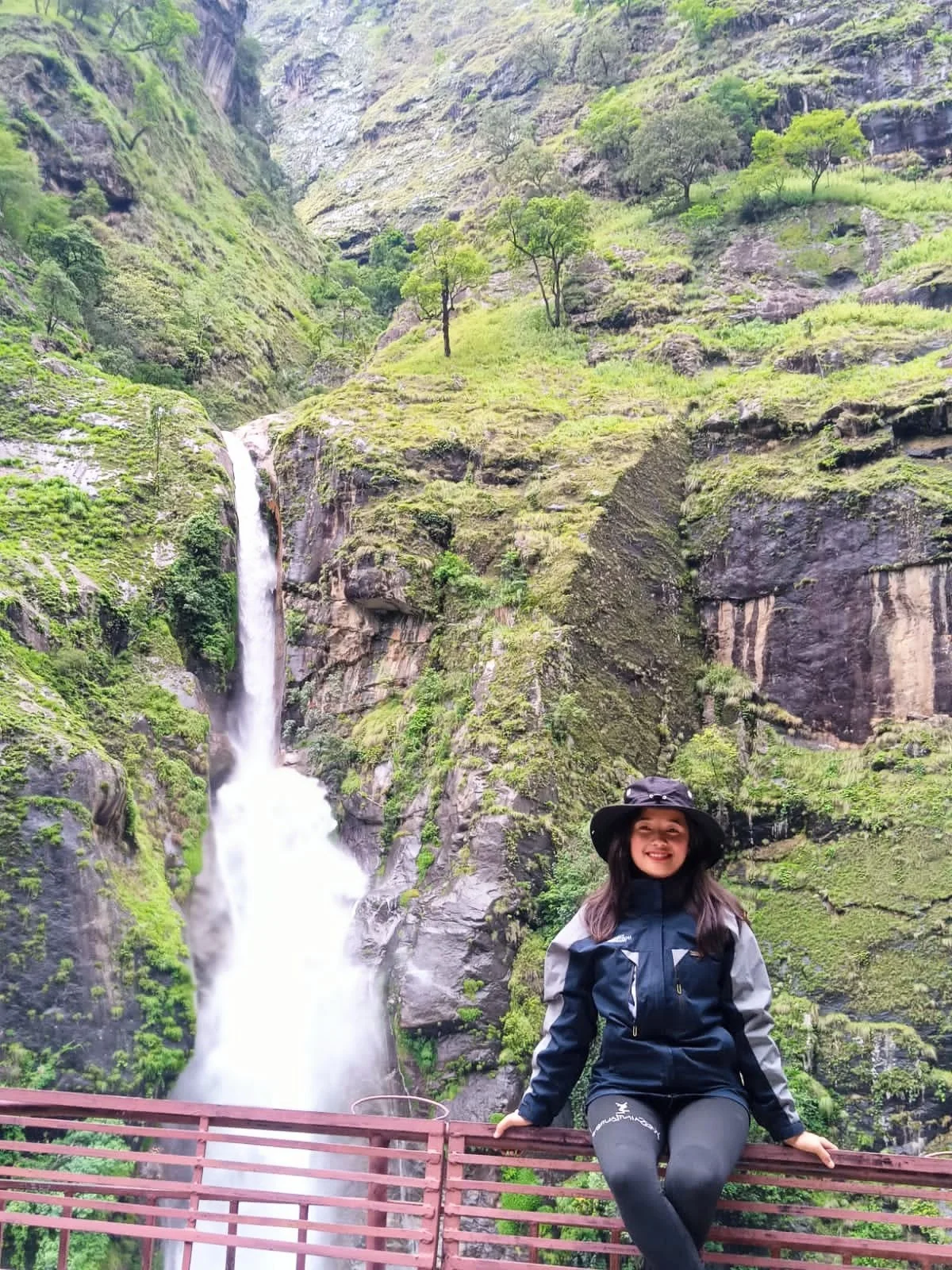
Lower sections of the region can contain cultivated landscapes, subtropical vegetation and forested hillsides. With increasing altitude, vegetation changes through temperate and subalpine forests before giving way to alpine meadows, rocky valleys, moraine and glaciers.
Much of this environment is protected within the Kanchenjunga Conservation Area, established to conserve the region’s biodiversity, landscapes and cultural heritage. The conservation area forms part of a wider transboundary Himalayan environment and contains habitats ranging from relatively low valleys to some of the highest terrain on Earth.
Wildlife associated with the wider conservation landscape includes species such as the snow leopard, red panda, Himalayan black bear, musk deer and blue sheep, together with diverse birdlife. These species contribute to the ecological importance of the region, although wildlife sightings should never be promised as part of a trekking itinerary.
Kanchenjunga’s human landscape is equally diverse.
Communities across eastern Nepal include Limbu, Rai, Sherpa and other ethnic and cultural groups, with traditions varying according to location and altitude. The trekking route passes through areas where agriculture, livestock, trade and mountain livelihoods continue to shape everyday life.
In higher valleys, particularly around settlements such as Ghunsa, travellers encounter communities with strong Tibetan Buddhist influences. Monasteries, prayer flags, mani walls and traditional houses become increasingly visible as the route climbs toward the high Himalaya.
This cultural diversity is one of the strongest reasons to treat Kanchenjunga as a complete regional destination, rather than simply marketing it as a base-camp trek.
The journey itself provides time to observe how architecture, agriculture, language, religion and livelihoods change as elevation increases.
Two Sides of the Kanchenjunga Massif
Kanchenjunga trekking is particularly interesting because journeys can explore both the northern and southern sides of the massif.
The northern approach eventually leads toward the high valley associated with Pangpema, commonly regarded as the northern base-camp area. From this remote Himalayan setting, trekkers experience extraordinary views of Kanchenjunga and the surrounding peaks.
The route toward the north passes through places such as Ghunsa and increasingly rugged alpine terrain. As settlements become fewer, the scale of the surrounding mountains becomes more pronounced.
The southern approach explores a different side of the massif and leads toward the high mountain landscapes around Oktang and Yalung. Here, trekkers experience another dramatic perspective on the Kanchenjunga range and its glaciers.
Some itineraries concentrate on one side of the mountain, while longer journeys connect the northern and southern valleys to create what is often described as the Kanchenjunga Circuit.
Connecting the two sides makes for a much more demanding journey. High passes and remote terrain separate the valleys, and travellers need sufficient time for acclimatization, changing weather and the physical demands of sustained trekking.
This is one reason Kanchenjunga trips are generally longer than many mainstream Nepal treks.
Ghunsa and the High Valleys
Among the most important settlements encountered on the northern route is Ghunsa, a traditional Himalayan village that serves as a natural staging point before travellers continue into higher and more sparsely inhabited terrain.
Ghunsa provides an important transition between the inhabited valley and the high mountains. It is also a useful location for acclimatization on itineraries continuing toward the northern base-camp area.
From the higher valleys, the landscape becomes increasingly severe. Forest gives way to open alpine terrain, glacial rivers, moraine and enormous mountain walls.
These transitions are part of what makes Kanchenjunga special. Rather than immediately entering barren high altitude, travellers experience the Himalayan environment changing progressively over many days.
A Trek Defined by Remoteness
Kanchenjunga receives far fewer trekkers than Nepal’s Everest and Annapurna regions. That lower visitor volume contributes to its reputation for wilderness, but the region should not simply be described as “untouched.”
People live throughout these valleys, and tourism exists alongside agriculture, animal husbandry, trade and other local livelihoods.
A more accurate description is that tourism infrastructure remains relatively limited and dispersed compared with Nepal’s major trekking corridors.
Accommodation has developed along established trekking routes, and teahouse-style journeys are increasingly possible on many itineraries. However, facilities can be considerably simpler than those found around Everest or Annapurna.
Travellers should therefore approach Kanchenjunga expecting comfort to vary from village to village.
The remoteness also affects logistics. Reaching the trekking area from Kathmandu takes considerably longer than reaching destinations such as Langtang, and changes in road and aviation infrastructure can influence the preferred trailhead.
Once deep within the region, there are limited possibilities for quickly leaving the route by road.
This makes contingency planning, experienced guiding and appropriate insurance especially important.
High Altitude and Acclimatization
The longer Kanchenjunga routes involve sustained travel at significant altitude. Travellers heading toward the northern or southern base-camp areas gradually enter terrain above 4,000 metres, while circuit itineraries can include high crossings connecting the valleys.
Acclimatization should therefore be treated as a fundamental part of the journey.
The gradual approach through the valleys can help the body adjust, but itineraries still need appropriately placed rest or acclimatization days. Weather delays and individual responses to altitude should also be considered.
Kanchenjunga is not a region where reducing the itinerary by several days simply to advertise a faster trek is necessarily beneficial.
At Himalayan Trek Ventures, the emphasis should be on thoughtful pacing and enough time to experience the region rather than treating every day as a race toward base camp.
More Than a Base-Camp Destination
The phrase “Kanchenjunga Base Camp Trek” is useful because travellers search for it, but geographically the experience is more complex.
There are northern and southern approaches, different itinerary combinations and longer circuits connecting parts of the massif. This gives HTV an opportunity to create clear trip pages later rather than forcing every Kanchenjunga experience into one generic package.
The Kanchenjunga Region page should establish the wider destination: its geography, conservation landscape, communities, cultural heritage and overall trekking character.
Places such as Ghunsa and Pangpema can be developed separately where useful, while individual trekking products can explain their precise route, duration, altitude profile, permits and accommodation.
This architecture also prevents the regional page from competing unnecessarily with individual trip pages for the same search intent.
Responsible Travel in Kanchenjunga
The region’s limited infrastructure makes responsible trekking particularly important.
Waste that is easy to remove from Kathmandu can become a serious problem in isolated mountain settlements. Trekking groups should minimise disposable packaging, manage non-biodegradable rubbish responsibly and avoid contaminating local water sources.
Cultural respect is equally important. Visitors should ask before photographing individuals, follow local customs around monasteries and religious monuments, and remember that trekking routes pass directly through people’s homes and working landscapes.
Using locally operated lodges, purchasing food and services within communities where practical, and employing experienced local trekking staff can help tourism contribute more directly to the regional economy.
Conservation should also shape the experience. The forests, alpine ecosystems and wildlife habitats of Kanchenjunga are part of a fragile Himalayan environment, and the goal should be to travel through them with as little unnecessary impact as possible.
The Character of a Kanchenjunga Journey
Kanchenjunga is particularly suited to travellers who value longer journeys, quieter trails and gradual immersion in a region.
It does not offer the convenience of flying directly into the heart of the mountains and reaching a famous destination within a few days.
Instead, its appeal comes from progression.
The journey begins among communities and cultivated landscapes. Forests gradually surround the trail. Villages become smaller and more widely separated. Peaks begin appearing above the valleys. Eventually, the traveller reaches a world dominated by glaciers, moraine and some of the highest mountains on Earth.
That gradual transformation gives the trek a strong sense of distance and scale.
Kanchenjunga also adds an important dimension to Himalayan Trek Ventures’ destination collection. It represents eastern Nepal at its most dramatic while offering a combination of high-altitude wilderness, biodiversity and cultural diversity that differs considerably from the better-known central and eastern trekking corridors.
For travellers prepared for the time, altitude and logistics involved, the Kanchenjunga Region offers one of Nepal’s great long-distance Himalayan journeys.
The mountain itself may be the geographical centrepiece, but the lasting experience comes from everything surrounding it—the forests and river valleys, remote settlements, Buddhist heritage, changing ecosystems, glaciers and the many days required to move gradually toward the immense Kanchenjunga massif.
It is this combination of mountain scale, cultural depth, ecological diversity and genuine remoteness that should define Kanchenjunga within Himalayan Trek Ventures: not simply another base-camp destination, but an entire Himalayan region worth travelling slowly enough to understand.