
Know before you go
About Hinku Cave
Hinku Cave — A Historic Mountain Shelter on the Annapurna Base Camp Trek
High above the forested landscapes of the Modi Khola Valley, where towering cliffs begin to dominate the trekking route towards Annapurna Sanctuary, lies Hinku Cave, one of the most distinctive natural landmarks along Nepal's Annapurna Base Camp Trek.
Situated at approximately 3,170–3,200 metres above sea level between Himalaya Hotel and Deurali, Hinku Cave is an imposing natural rock overhang that reflects the geological character and trekking heritage of the Annapurna Himalayas.
Long before mountain teahouses became widely established along this route, natural shelters such as Hinku Cave offered protection to people travelling through the remote mountain valley. Today, the landmark provides a fascinating connection to the earlier days of Himalayan trekking.
Unlike the panoramic viewpoints and traditional villages encountered elsewhere in the Annapurna region, Hinku Cave derives its appeal from its rugged geological appearance, historical significance and dramatic mountain surroundings.
Passing this landmark also marks an important transition in the Annapurna Base Camp journey, as the sheltered woodland landscapes gradually give way to exposed mountain slopes and increasingly demanding high-altitude terrain.
Where Is Hinku Cave Located?
Hinku Cave is situated within Kaski District of Gandaki Province, Nepal, inside the Annapurna Conservation Area.
The landmark occupies a position along the upper Modi Khola Valley, between the mountain accommodation settlements of Himalaya Hotel and Deurali.
Travellers following the traditional Annapurna Base Camp trekking route encounter Hinku Cave after ascending through Chhomrong, Sinuwa, Bamboo, Dovan and Himalaya.
The surrounding geographical landscape is characterised by steep mountain slopes, rocky cliffs, seasonal watercourses and increasingly sparse vegetation.
Hinku Cave is accessible exclusively on foot. There are no direct roads or independent transportation facilities connecting the landmark with Pokhara or surrounding settlements.
Its location makes it a naturally integrated attraction within the Annapurna Base Camp Trek rather than a separate sightseeing destination.
What Is Hinku Cave?
Despite its name, Hinku Cave is not a deep underground cavern or an extensive cave system.
It is a large natural rock overhang that projects outward from the mountainside, creating a partially sheltered space beneath the cliff.
The distinctive formation stands out against the rugged terrain of the upper Modi Khola Valley and is easily recognisable from the established trekking pathway.
The shelter illustrates the dramatic geological character of the Annapurna region, where steep mountain slopes have been shaped over long periods by erosion, geological processes and changing environmental conditions.
Visitors should not expect developed cave exploration facilities, underground passages or artificial lighting.
Hinku Cave is best appreciated as a natural geological landmark encountered during the trekking journey.
Historical Significance of Hinku Cave
Before the development of modern mountain accommodation along the Annapurna Base Camp trekking corridor, travelling through the upper Modi Khola Valley required considerably greater self-sufficiency.
Natural rock shelters provided temporary protection from rainfall, wind and snowfall for porters, early trekkers and people travelling through the mountains.
Hinku Cave is remembered in trekking accounts as one of these traditional shelters.
Its projecting rock formation offered basic cover in a landscape where permanent accommodation facilities were once scarce.
Historical trekking guidebooks also identify Hinku Cave as the former location of a teahouse.
Although detailed records of its earliest use are limited, the landmark remains an important reminder of the period before organised lodge-based trekking became widely established throughout the Annapurna region.
Today, nearby accommodation settlements provide significantly more comfortable facilities, allowing visitors to appreciate Hinku Cave for its historical and natural significance rather than depending on it for overnight shelter.
A Window into Early Himalayan Trekking
Modern trekkers travelling towards Annapurna Base Camp benefit from established pathways, mountain lodges, organised trekking services and improved logistical support.
Earlier journeys through the Annapurna Himalayas required travellers and support teams to carry much of their own equipment, food and sleeping supplies.
Natural shelters could provide valuable temporary protection during difficult mountain journeys.
Hinku Cave offers an opportunity to reflect on the physical challenges experienced by earlier travellers and the essential contribution of local porters and guides to Himalayan exploration.
The landmark represents a connection between the traditional mountain journeys of the past and the established trekking experiences available today.
Hinku Cave Altitude and Significance
Hinku Cave is commonly recorded at approximately 3,170 metres in trekking guidebooks, while broader descriptions of the surrounding area sometimes refer to an elevation of around 3,200 metres.
At this elevation, travellers have progressed beyond much of the lower forested trekking corridor and are approaching increasingly exposed mountain terrain.
The altitude also represents an important stage in the body's adjustment to reduced oxygen availability.
Travellers should maintain a comfortable walking pace, monitor their physical condition and follow appropriate acclimatisation practices before continuing towards higher elevations.
Although Hinku Cave itself is not an overnight acclimatisation destination, its position provides a useful geographical reference along the ascent towards Deurali.
The Journey from Himalaya Hotel to Hinku Cave
The ascent from Himalaya Hotel, situated at approximately 2,920 metres, introduces trekkers to an increasingly dramatic section of the Annapurna Base Camp route.
Leaving behind the mountain lodges, travellers follow an ascending pathway through woodland and rocky terrain.
As the route gains elevation, sections of vegetation become less dense and the surrounding cliffs increasingly dominate the landscape.
The journey to Hinku Cave generally takes around one hour, depending on individual walking pace and trail conditions.
The landmark appears against the mountainside as a striking natural feature, providing a visible reminder of the changing geographical environment.
Wet rocks, uneven stone surfaces and seasonal snow can affect walking conditions along this section.
Hinku Cave to Deurali
Beyond Hinku Cave, the established trekking pathway continues towards Deurali, commonly listed at approximately 3,200–3,230 metres.
The route becomes increasingly open, with rocky slopes and steep mountain walls defining the surrounding scenery.
Under favourable conditions, the onward journey from Hinku Cave to Deurali may take approximately 45 minutes to one hour.
However, walking times can increase considerably when snow, rainfall or damaged pathways affect accessibility.
Sections of the route are susceptible to seasonal avalanches and rockfall, making professional safety assessments particularly important.
Deurali provides established accommodation and dining facilities, allowing trekkers to rest before continuing towards Machhapuchhre Base Camp.
Hinku Cave on the Annapurna Base Camp Trek Route
Hinku Cave forms part of the traditional trekking corridor leading into Annapurna Sanctuary.
The established route includes:
Chhomrong — Approximately 2,170 metres.
Upper Sinuwa — Approximately 2,340 metres.
Bamboo — Approximately 2,310 metres.
Dovan — Approximately 2,600 metres.
Himalaya Hotel — Approximately 2,920 metres.
Hinku Cave — Approximately 3,170 metres.
Deurali — Approximately 3,200–3,230 metres.
Machhapuchhre Base Camp — Approximately 3,700 metres.
Annapurna Base Camp — Approximately 4,130 metres.
The landmark is commonly encountered during trekking stages connecting Bamboo, Dovan or Himalaya Hotel with Deurali.
Travellers also pass through the area while descending from Annapurna Base Camp along the traditional return route.
The Modi Khola Valley
The geographical character of Hinku Cave is closely connected with the upper Modi Khola Valley.
This steep mountain corridor forms the principal trekking approach into Annapurna Sanctuary from the southern Annapurna foothills.
The Modi Khola carries water from the higher mountain environment through a succession of narrow valleys, rocky gorges and forested landscapes before joining the Kali Gandaki River system.
Around Hinku Cave, the surrounding cliffs create a dramatic sense of enclosure.
Mountain streams descend through the valley slopes, and seasonal waterfalls contribute to the distinctive natural atmosphere.
The combination of towering rock formations, flowing water and increasingly exposed terrain provides a striking contrast to the dense woodland encountered around Bamboo and Dovan.
Geological Character and Natural Rock Formations
Hinku Cave offers travellers an opportunity to appreciate the rugged geology of the Annapurna Himalayas.
Its prominent rock overhang illustrates the variety of natural formations encountered throughout the upper Modi Khola Valley.
The wider Himalayan mountain system developed through the ongoing convergence of the Indian and Eurasian tectonic plates.
Over geological time, erosion, flowing water, glacial activity and weathering have influenced the shape of the region's valleys and mountainsides.
Around Hinku Cave, steep cliffs, fractured rock surfaces and uneven mountain terrain demonstrate the dynamic nature of Himalayan landscapes.
The precise geological history of the individual rock shelter is not extensively documented, making it important to distinguish general Himalayan geological processes from proven explanations of the cave's formation.
Transition from Forest to Alpine Landscapes
One of the most rewarding aspects of visiting Hinku Cave is experiencing the gradual ecological transformation of the Annapurna trekking corridor.
Lower destinations such as Bamboo and Dovan are surrounded by dense vegetation, including bamboo groves, rhododendron woodland, ferns and moss-covered rocks.
Around Himalaya Hotel and Hinku Cave, rocky slopes become more prominent and the woodland begins to thin in places.
As travellers continue towards Deurali and Machhapuchhre Base Camp, increasingly exposed mountain environments become apparent.
Mountain shrubs, hardy vegetation, rocky ground and seasonal snow gradually replace the extensive forest landscapes found at lower elevations.
This transition provides a memorable introduction to the diverse ecological zones of the Annapurna Conservation Area.
Wildlife and Biodiversity
The surrounding Annapurna Conservation Area supports diverse vegetation and wildlife across a wide range of elevations.
Forested sections below Hinku Cave provide habitats for Himalayan woodland birds, butterflies and various mountain mammals.
At higher elevations, vegetation becomes increasingly influenced by colder temperatures, shorter growing seasons and exposed mountain conditions.
Travellers may encounter mountain birds and hardy native plant species along the trekking route.
Wildlife sightings remain unpredictable and depend on seasonal conditions, geographical location and animal behaviour.
Visitors should observe wildlife quietly, avoid feeding animals and protect the surrounding natural vegetation.
Waterfalls and Mountain Streams
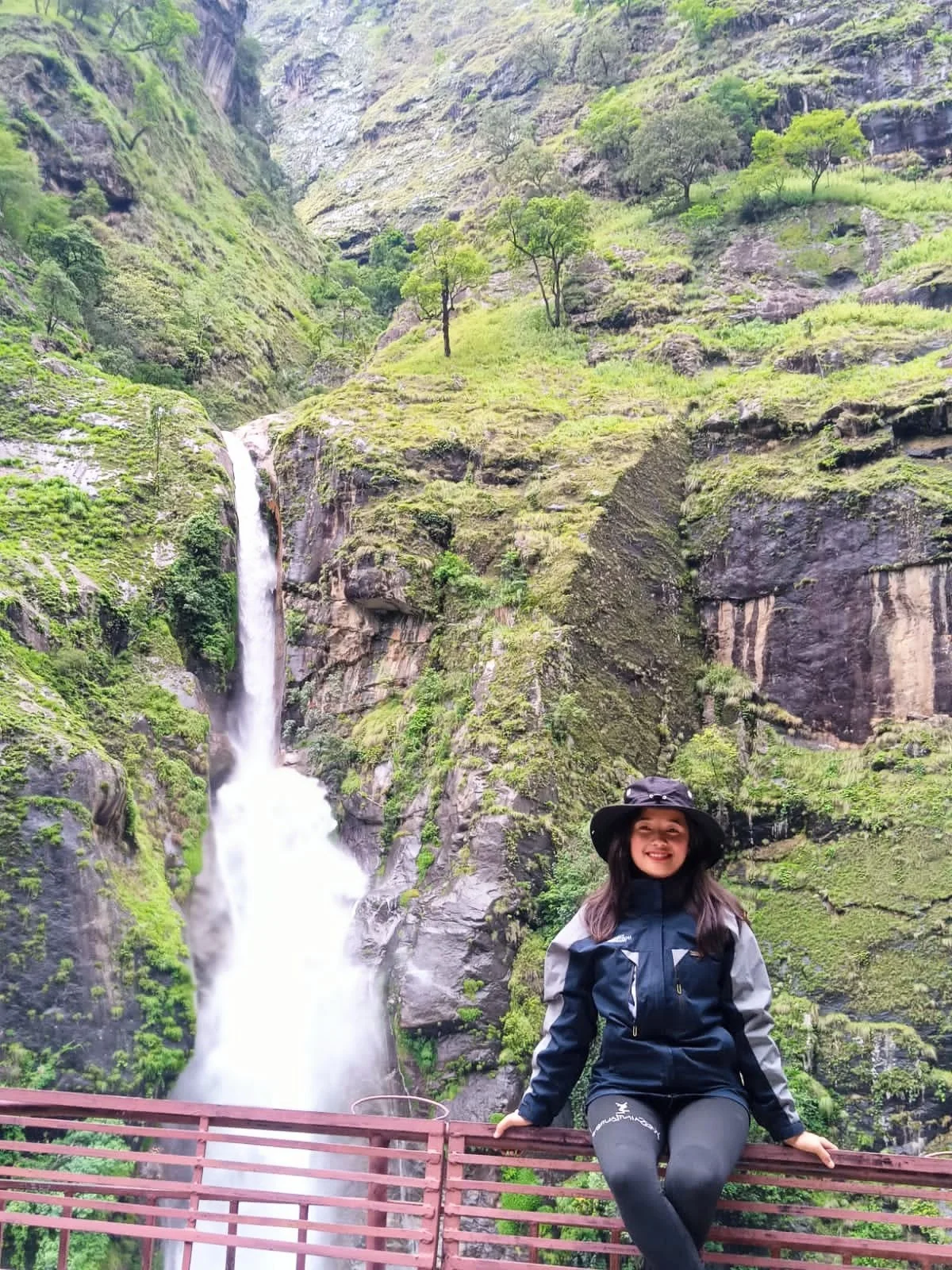
Seasonal waterfalls and natural streams contribute significantly to the scenery surrounding Hinku Cave.
During periods of rainfall and snowmelt, water descends through rocky channels and across steep valley slopes.
These natural features create atmospheric scenery, particularly when mist drifts through the upper Modi Khola Valley.
However, flowing water can also affect trail conditions, making rocky surfaces slippery and increasing the difficulty of certain crossings.
Travellers should appreciate waterfalls from safe locations and avoid leaving established pathways to approach unstable cliffs or watercourses.
Mountain Scenery Around Hinku Cave
Hinku Cave is not primarily a panoramic Himalayan viewpoint.
Its geographical setting within a steep, narrow valley can restrict uninterrupted views of distant mountain summits.
Instead, the landmark offers an intimate perspective of the Himalayan environment through towering cliffs, rugged mountain slopes and dramatic natural formations.
The surrounding terrain reflects the scale and complexity of the Annapurna mountain system.
As travellers continue towards Machhapuchhre Base Camp, the valley eventually opens into the expansive mountain landscapes that characterise Annapurna Sanctuary.
This contrast between enclosed rocky terrain and the spectacular high-altitude amphitheatre is one of the defining experiences of the Annapurna Base Camp Trek.
Avalanche-Prone Terrain Around Hinku Cave
The section of the Annapurna Base Camp trekking route surrounding Hinku Cave and Deurali is known for seasonal avalanche hazards.
Steep mountainsides rise above the trekking corridor, and snow can accumulate across higher slopes during colder periods.
Heavy snowfall, changing temperatures and unstable mountain conditions can influence avalanche risk.
Falling rocks and landslides may also affect the surrounding terrain, particularly during periods of rainfall or changing weather.
Travellers should understand that the historical use of Hinku Cave as a rock shelter does not establish it as a reliable protected location during modern avalanche or rockfall events.
Always follow current local safety advice, respect trail closures and allow trekking professionals to assess whether onward travel is appropriate.
Avoid unnecessary stops in exposed sections, including stopping for photographs when conditions are unsafe.
Spring at Hinku Cave — March to May
Spring is a popular season for the Annapurna Base Camp Trek.
The forests below Hinku Cave may feature flowering rhododendrons, while warmer conditions gradually influence the higher mountain environment.
Seasonal snow may remain across surrounding slopes, particularly during March and early spring.
The combination of woodland scenery, flowing mountain streams and snow-covered cliffs can create striking visual contrasts.
However, rising temperatures and snowmelt may influence trail stability and avalanche conditions.
Travellers should assess current conditions rather than assuming that spring guarantees safe passage through every section of the valley.
Autumn at Hinku Cave — September to November
Autumn generally provides favourable conditions for trekking through the Annapurna region following the main monsoon season.
October and November are particularly popular because of reduced rainfall and generally more settled mountain weather.
The surrounding landscape offers dramatic rocky scenery, cooler trekking temperatures and opportunities to appreciate the changing ecological environment.
Autumn is well suited to travellers interested in combining geological landmarks, comfortable trekking conditions and the spectacular mountain scenery beyond Deurali.
Residual monsoon rainfall may continue during early September.
Winter at Hinku Cave — December to February
Winter introduces significantly colder conditions and an increased possibility of snow accumulation around Hinku Cave.
The surrounding mountain pathways may become icy, snow-covered or difficult to navigate.
Avalanche hazards can affect exposed sections between Himalaya Hotel, Deurali and Machhapuchhre Base Camp.
Winter visitors require suitable insulated clothing, appropriate trekking equipment and professional assessment of current route conditions.
Access cannot be guaranteed during periods of heavy snowfall or temporary trail closures.
Monsoon at Hinku Cave — June to September
The monsoon season brings increased rainfall, flowing waterfalls and lush vegetation throughout the lower Modi Khola Valley.
Around Hinku Cave, mist and cloud formations can create atmospheric mountain scenery.
Nevertheless, prolonged rainfall increases the possibility of landslides, falling rocks, slippery pathways and swollen mountain streams.
Reduced visibility may also affect navigation and the ability to assess surrounding hazards.
Travellers should maintain flexible itineraries and prioritise current local safety information when trekking during the monsoon.
Photography at Hinku Cave
Hinku Cave provides distinctive photographic opportunities for travellers interested in natural rock formations and Himalayan landscape photography.
The large projecting rock shelter, surrounding cliff faces and dramatic valley environment create a strong sense of scale.
Potential photographic subjects include:
The distinctive natural rock overhang.
Towering mountain cliffs.
Rocky trekking pathways.
Seasonal waterfalls and mountain streams.
Mist-covered valley slopes.
Changing vegetation along the upper Modi Khola Valley.
Seasonal snow across higher mountain slopes.
Photography should only take place from safe, established locations.
Visitors should never remain within avalanche-prone areas or beneath unstable cliffs solely to capture photographs.
Accommodation Near Hinku Cave
Hinku Cave does not function as a modern trekking accommodation settlement.
Visitors should not expect bedrooms, restaurants, toilets, electricity or other developed hospitality facilities at the landmark.
The nearest established accommodation options are located at Himalaya Hotel and Deurali.
Both settlements provide basic mountain teahouses offering accommodation, meals and resting facilities.
Travellers should arrange overnight accommodation according to their trekking itinerary, acclimatisation requirements and current weather conditions.
Sleeping beneath the natural rock overhang is not recommended because of potential environmental hazards and the availability of established accommodation nearby.
Cultural Connections with Annapurna Sanctuary
Hinku Cave lies within a broader mountain landscape that holds spiritual significance for surrounding communities.
The Annapurna massif is associated with the Hindu goddess of nourishment and abundance, while Machhapuchhre is widely regarded as sacred.
Traditional Gurung beliefs also recognise cultural and spiritual connections with mountains, forests, rivers and other natural features throughout the region.
However, Hinku Cave should not be described as an established temple, monastery or pilgrimage site without reliable supporting evidence.
Its documented significance is primarily associated with its geological appearance and historical use as a natural mountain shelter.
Travellers should appreciate the landmark within the wider cultural and spiritual context of Annapurna Sanctuary while respecting local interpretations and traditions.
Conservation and Responsible Tourism
Hinku Cave is located within the Annapurna Conservation Area, where protecting natural landscapes and supporting community-based tourism remain important priorities.
The increasing popularity of the Annapurna Base Camp Trek creates additional pressure on sensitive mountain ecosystems.
Visitors should help preserve Hinku Cave by avoiding graffiti, rock inscriptions, rubbish disposal and unnecessary disturbance of surrounding vegetation.
Natural rock surfaces should remain undamaged, allowing future travellers to appreciate the landmark in its original condition.
Trekkers should carry personal waste, protect nearby watercourses and remain on established trekking pathways.
Supporting responsible trekking practices also contributes to the wider preservation of the Modi Khola Valley and Annapurna Sanctuary.
Continuing Towards Machhapuchhre Base Camp
Beyond Hinku Cave and Deurali, the trekking route continues towards Machhapuchhre Base Camp at approximately 3,700 metres.
The surrounding landscape gradually becomes more open, revealing increasingly prominent Himalayan peaks and high-altitude mountain scenery.
Machhapuchhre Base Camp provides an important accommodation destination and a spectacular introduction to Annapurna Sanctuary.
Travellers should plan this onward journey carefully because of the considerable elevation gain and seasonal hazards within the upper valley.
Appropriate acclimatisation, suitable equipment and professional guidance remain essential.
Continuing Towards Annapurna Base Camp
Annapurna Base Camp, situated at approximately 4,130 metres, represents the principal destination of the trekking journey through Hinku Cave.
The final approach enters a magnificent natural mountain amphitheatre surrounded by towering Himalayan peaks, including Annapurna I, Annapurna South, Hiunchuli and Machhapuchhre.
The expansive mountain scenery contrasts dramatically with the enclosed rocky landscapes around Hinku Cave.
For many travellers, this geographical transformation becomes one of the most memorable aspects of the entire Annapurna Base Camp Trek.
Why Hinku Cave Is Worth Experiencing
Hinku Cave offers a distinctive experience within the Annapurna region through its combination of natural geology, trekking heritage and dramatic mountain scenery.
Its historical association with early mountain journeys provides a meaningful connection to the development of Himalayan trekking.
The remarkable rock formation also highlights the geological diversity of the upper Modi Khola Valley.
Unlike destinations celebrated primarily for panoramic summit views or traditional architecture, Hinku Cave reveals the rugged, practical and historical character of mountain travel.
Its location between Himalaya Hotel and Deurali makes it an important geographical landmark on the approach to Annapurna Sanctuary.
Experience Hinku Cave with Himalayan Trek Ventures
At Himalayan Trek Ventures, we believe that the Annapurna Base Camp Trek is defined not only by its magnificent final destination but also by the remarkable landscapes and historical landmarks encountered throughout the journey.
Hinku Cave represents one of these meaningful encounters, connecting the earlier traditions of Himalayan trekking with the dramatic natural environment of the upper Modi Khola Valley.
Our approach emphasises responsible exploration, carefully planned trekking stages, appropriate acclimatisation and respect for current mountain safety conditions.
As travellers journey beyond Hinku Cave towards Deurali, Machhapuchhre Base Camp and Annapurna Sanctuary, they experience the extraordinary transformation of Nepal's Himalayan landscapes.
From sheltered forest pathways to rugged mountain cliffs and magnificent alpine scenery, Hinku Cave forms a memorable chapter in the journey towards Annapurna Base Camp.