
Know before you go
About Himalaya (ABC Trek)
Himalaya, Annapurna — The Gateway Between Himalayan Forests and Annapurna Sanctuary
Deep within the upper Modi Khola Valley, where dense mountain forests gradually give way to rugged cliffs and increasingly dramatic Himalayan landscapes, lies Himalaya, a secluded trekking settlement situated at approximately 2,920 metres above sea level.
Also known as Himalaya Hotel, this small collection of mountain lodges occupies an important position along Nepal's renowned Annapurna Base Camp Trek. Located between Dovan and Deurali, Himalaya provides travellers with a welcoming resting point before ascending towards Hinku Cave, Machhapuchhre Base Camp and the spectacular Annapurna Sanctuary.
Unlike the larger cultural villages of Ghandruk and Chhomrong, Himalaya is primarily a trekking accommodation settlement. Its appeal lies in its remote geographical setting, dramatic natural surroundings and the distinctive transition between forested valleys and high-altitude mountain environments.
The sound of flowing mountain streams, steep forest-covered slopes and mist drifting through the valley creates an atmosphere that captures the quieter, more secluded character of the Annapurna Himalayas.
Where Is Himalaya Located?
Himalaya is situated within Kaski District of Gandaki Province in north-central Nepal. It lies inside the Annapurna Conservation Area, Nepal's largest conservation area, covering approximately 7,629 square kilometres.
The settlement occupies a position along the upper Modi Khola Valley, the principal trekking corridor leading into Annapurna Sanctuary from the southern Annapurna foothills.
Its immediate geographical surroundings include steep mountain slopes, dense woodland, rocky cliffs and natural watercourses descending from the higher Himalayan landscapes.
Himalaya lies beyond Dovan and below Hinku Cave and Deurali, making it an important intermediate destination along the Annapurna Base Camp trekking route.
There is no direct motorable road connecting Himalaya with Pokhara or other major settlements. Visitors reach the destination exclusively on foot through established mountain trekking pathways.
Himalaya Hotel — Understanding the Settlement's Name
The destination is frequently identified as Himalaya Hotel on trekking maps, guidebooks and Annapurna Base Camp itineraries.
Rather than referring to a conventional village with extensive residential infrastructure, the name identifies a small trekking accommodation area developed along the route towards Annapurna Sanctuary.
The settlement's mountain lodges provide essential accommodation, meals and resting facilities for travellers progressing towards higher elevations.
Although the name Himalaya can also refer to the vast Himalayan mountain range extending across several Asian countries, Himalaya on the Annapurna Base Camp Trek refers specifically to this remote accommodation settlement between Dovan and Deurali.
A Significant Transition Along the Annapurna Base Camp Trek
One of the most distinctive aspects of Himalaya is its position within the changing ecological landscape of the Annapurna trekking corridor.
Travellers approaching from Chhomrong, Sinuwa, Bamboo and Dovan experience extensive sections of temperate Himalayan woodland, characterised by dense vegetation, shaded pathways and flowing mountain streams.
As the trail approaches Himalaya, the surrounding landscape begins to change.
Rocky mountain slopes become increasingly prominent, the valley feels more enclosed and sections of woodland gradually become less dense as elevation increases.
Beyond Himalaya, the trekking pathway continues towards Hinku Cave and Deurali, where the landscape becomes progressively more exposed.
This geographical transition provides a fascinating introduction to the high-altitude environments that define Annapurna Sanctuary.
The Modi Khola Valley
The Modi Khola River system shapes much of the natural landscape surrounding Himalaya.
Originating from the higher Annapurna mountain environment, the river flows southwards through steep valleys and eventually joins the Kali Gandaki River system.
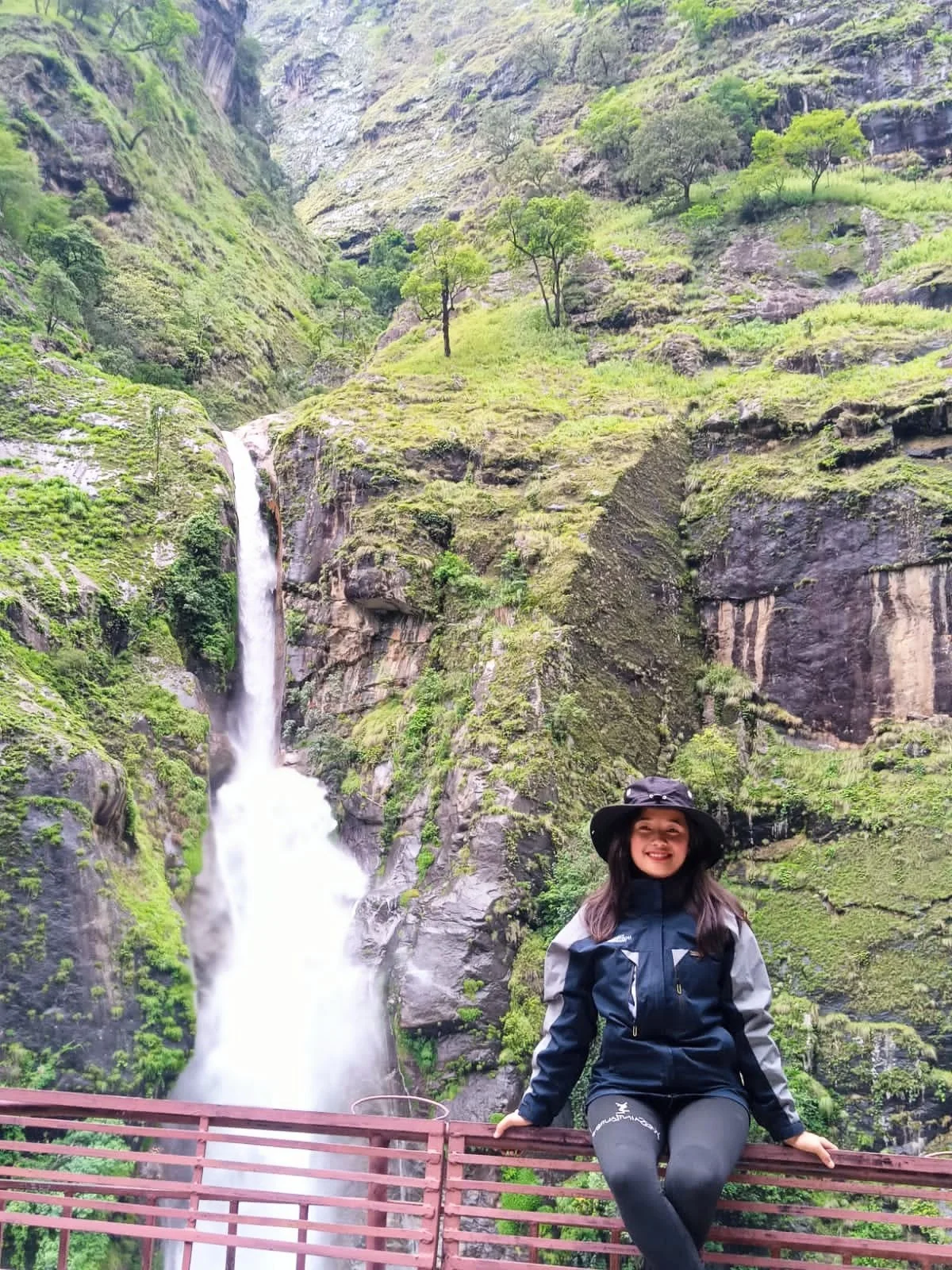
Throughout the upper trekking corridor, mountain streams and seasonal waterfalls descend from surrounding slopes, contributing to the region's rich ecological character.
The valley's steep geographical profile creates a dramatic sense of enclosure, particularly around Dovan, Himalaya and Deurali.
Unlike the expansive mountain viewpoints found at destinations such as Poon Hill, Himalaya offers a more intimate encounter with Himalayan geography.
Its natural beauty is expressed through towering valley walls, flowing water, dense vegetation and the changing textures of mountain terrain.
The Trek from Dovan to Himalaya
The journey from Dovan to Himalaya follows an established ascending trail through the upper Modi Khola Valley.
Trekkers leave behind Dovan's secluded accommodation area and continue through forested pathways, rocky terrain and natural mountain watercourses.
The route gradually gains elevation, bringing travellers closer to the increasingly exposed landscapes of the upper Annapurna trekking corridor.
The walking journey generally takes approximately 1.5–2.5 hours, depending on individual pace, starting accommodation location and trail conditions.
Although the distance is relatively manageable, uneven terrain, wet surfaces and sustained uphill sections can increase the physical demands of the journey.
Himalaya provides a convenient opportunity to enjoy refreshments, have lunch or stay overnight before continuing towards Deurali.
Himalayan Forests and Natural Vegetation
The surrounding landscape of Himalaya forms part of the Annapurna Conservation Area's diverse mountain ecosystem.
Vegetation changes considerably with elevation, slope exposure and seasonal weather conditions.
Forested sections along the approach to Himalaya may feature rhododendron trees, bamboo vegetation, mountain shrubs, ferns and moss-covered rocks.
The relatively moist conditions of the Modi Khola Valley support dense vegetation across suitable sections of the surrounding mountain slopes.
During spring, flowering rhododendrons and other seasonal plants introduce colourful contrasts to the forest landscape.
During the monsoon, increased rainfall transforms the valley into an intensely green environment characterised by flowing waterfalls, mist-covered cliffs and lush vegetation.
As travellers ascend beyond Himalaya, colder temperatures and increasingly exposed terrain gradually influence the distribution of forest vegetation.
Wildlife and Biodiversity
The Annapurna Conservation Area supports remarkable biodiversity across its subtropical, temperate, alpine and high mountain environments.
The forested landscapes surrounding Himalaya provide suitable habitats for various Himalayan woodland birds, insects and forest-dwelling mammals.
Travellers may encounter colourful birds, butterflies and other smaller wildlife along quieter sections of the trekking pathway.
The wider Annapurna region also supports species such as Himalayan langurs, barking deer and Himalayan black bears, although sightings around Himalaya are unpredictable.
The settlement's ecological significance is closely connected with the surrounding forests and natural water systems.
Responsible wildlife observation, minimal disturbance and protection of natural habitats remain essential aspects of trekking through this sensitive mountain environment.
Waterfalls and Mountain Streams
Natural water features are among the defining attractions of the trekking corridor around Himalaya.
Numerous mountain streams descend through the steep valley slopes, creating seasonal waterfalls and contributing to the continuous movement of water throughout the surrounding landscape.
During wetter months, these waterfalls become particularly prominent.
The combination of cascading water, forest vegetation and mist-covered mountain slopes creates atmospheric scenery that differs considerably from the open alpine landscapes encountered farther along the Annapurna Base Camp Trek.
Visitors should observe waterfalls from safe locations along established trekking pathways, particularly during periods of heavy rainfall when water levels and slope instability can increase.
Hinku Cave — The Next Landmark Beyond Himalaya
One of the most recognisable geographical landmarks beyond Himalaya is Hinku Cave.
Situated along the ascending trekking pathway towards Deurali, Hinku Cave is a prominent natural rock overhang formed within the steep mountain landscape.
The feature is frequently identified in Annapurna Base Camp trekking itineraries because of its distinctive appearance and strategic location along the route.
Rather than an extensive underground cave system, Hinku Cave is best understood as a natural rock shelter.
The journey towards this landmark introduces travellers to increasingly rugged terrain, exposed rock formations and dramatic mountain slopes.
Visitors should follow established pathways and avoid unnecessary exploration beneath unstable rock surfaces.
Himalaya to Deurali
Deurali, situated at approximately 3,200 metres, is the next major trekking accommodation destination beyond Himalaya.
The route passes through the area around Hinku Cave before continuing towards the higher sections of the Modi Khola Valley.
The journey generally takes approximately 1.5–3 hours, depending on walking pace, weather and trail conditions.
As elevation increases, the landscape becomes more exposed and the influence of high-altitude mountain weather becomes increasingly noticeable.
Deurali provides another important overnight destination for travellers preparing to continue towards Machhapuchhre Base Camp and Annapurna Base Camp.
Seasonal snowfall, falling rocks and avalanche hazards can affect sections of the onward trekking corridor, making current local safety assessments particularly important.
Gateway to Machhapuchhre Base Camp
Beyond Deurali, the trekking route continues towards Machhapuchhre Base Camp, commonly abbreviated as MBC.
Situated at approximately 3,700 metres, Machhapuchhre Base Camp marks the transition into the spectacular high mountain environment of Annapurna Sanctuary.
Despite its name, the destination primarily serves trekkers rather than climbers attempting to summit Machhapuchhre, which remains closed to mountaineering.
Travellers approaching from Himalaya experience a substantial change in scenery as dense forest environments give way to open mountain slopes, alpine vegetation and increasingly prominent Himalayan peaks.
The considerable elevation gain makes appropriate acclimatisation and carefully planned overnight stages essential.
Continuing Towards Annapurna Base Camp
Annapurna Base Camp, situated at approximately 4,130 metres, is the principal destination for most travellers passing through Himalaya.
The established onward route follows:
Himalaya – Hinku Cave – Deurali – Machhapuchhre Base Camp – Annapurna Base Camp.
The journey leads into a remarkable natural amphitheatre surrounded by towering Himalayan mountains, including Annapurna I, Annapurna South, Hiunchuli and Machhapuchhre.
The contrast between Himalaya's enclosed valley environment and the expansive mountain scenery of Annapurna Sanctuary represents one of the most rewarding geographical transitions of the entire trek.
Travellers should divide the onward journey into suitable stages according to their previous sleeping elevation, physical condition and acclimatisation requirements.
Mountain Views Around Himalaya
Himalaya is not primarily known for uninterrupted panoramic mountain views.
Its position within a steep, enclosed valley means that surrounding slopes, vegetation and weather conditions can restrict visibility of distant Himalayan summits.
However, the immediate landscape offers its own distinctive beauty through towering cliffs, forest-covered mountainsides and dramatic natural water features.
Occasional glimpses of higher mountain terrain may become visible through openings in the valley, depending on the weather and observation location.
Travellers seeking expansive Himalayan panoramas will encounter more suitable viewpoints farther along the route, particularly around Machhapuchhre Base Camp and Annapurna Base Camp.
Traditional Mountain Teahouse Accommodation
Accommodation in Himalaya consists primarily of modest mountain teahouses and trekking lodges.
These establishments provide essential hospitality services in a remote geographical setting without direct road access.
Typical accommodation includes basic bedrooms, communal dining areas and shared bathroom facilities.
Selected lodges may provide hot showers, electrical charging and internet connectivity, although availability varies.
The simplicity of accommodation reflects the practical challenges of operating tourism infrastructure within the upper Modi Khola Valley.
After a demanding trekking stage, a warm meal and comfortable resting space provide a welcome opportunity to recover before continuing towards higher elevations.
During peak trekking seasons, advance accommodation arrangements are advisable because the settlement has limited lodging capacity.
Food and Mountain Hospitality
Mountain lodges in Himalaya generally serve traditional Nepalese cuisine alongside familiar international trekking dishes.
Dal bhat, consisting of rice, lentil soup and vegetables, remains a popular choice among trekkers seeking nourishing meals during physically demanding journeys.
Other available dishes may include noodles, fried rice, potato dishes, soups, eggs, porridge and pancakes.
Food supplies must be transported through mountain trekking pathways, influencing menu availability and prices.
The surrounding Annapurna Sanctuary also holds spiritual significance for local communities, and traditional beliefs concerning certain meat products should be respected.
Vegetarian meals provide a practical and widely available option throughout the trekking corridor.
Himalaya as an Intermediate Overnight Destination
Himalaya's elevation of approximately 2,920 metres makes it a useful intermediate destination for travellers progressing towards the higher Annapurna Sanctuary.
Although it is not generally considered a dedicated acclimatisation settlement, staying overnight here can help divide longer trekking stages into more manageable sections.
Travellers approaching from lower elevations may benefit from a gradual progression through Bamboo, Dovan, Himalaya and Deurali.
The appropriate overnight arrangement depends on individual fitness, previous sleeping elevations, weather conditions and the overall trekking itinerary.
Himalaya can also provide a convenient resting destination during the descent from Annapurna Base Camp.
Spring in Himalaya — March to May
Spring introduces gradually warming temperatures and renewed vegetation throughout the Annapurna trekking corridor.
Forested sections below and around Himalaya may feature colourful rhododendron blossoms and other seasonal flowering plants.
Mountain streams continue flowing through the valley, while changing sunlight and cloud formations create attractive photographic opportunities.
Spring is particularly rewarding for travellers interested in combining Himalayan trekking with woodland scenery and botanical diversity.
Afternoon cloud development, rainfall and occasional thunderstorms remain possible, particularly towards the end of the season.
Autumn in Himalaya — September to November
Autumn is among the most popular trekking seasons in the Annapurna region.
Following the main monsoon period, rainfall generally decreases and trekking conditions become more favourable.
October and November are particularly popular for journeys towards Annapurna Base Camp.
The surrounding forests retain much of their natural greenery, while cooler temperatures contribute to comfortable walking conditions.
Accommodation demand increases during this period, making advance planning especially valuable in smaller settlements such as Himalaya.
Winter in Himalaya — December to February
Winter introduces colder temperatures, shorter daylight hours and the possibility of frost or snowfall.
The settlement's enclosed valley setting can limit direct sunlight during parts of the day, contributing to particularly chilly mornings and evenings.
Although Himalaya may remain accessible during winter, conditions beyond the settlement can become significantly more challenging.
Snow accumulation and avalanche hazards may affect sections around Deurali and the upper Annapurna Sanctuary.
Winter trekking requires suitable cold-weather equipment, flexible itineraries and careful assessment of current mountain conditions.
Monsoon in Himalaya — June to September
During the monsoon, the upper Modi Khola Valley becomes an exceptionally lush mountain environment.
Waterfalls increase in volume, vegetation becomes dense and clouds frequently drift through the surrounding forested slopes.
Despite its atmospheric natural beauty, monsoon trekking presents considerable challenges.
Heavy rainfall can create slippery pathways, swollen mountain streams, landslides, falling rocks and reduced visibility.
Leeches may also be encountered along lower forested sections of the trekking corridor.
Travellers visiting during this period should prioritise safety, appropriate waterproof equipment and reliable local guidance.
Photography in Himalaya
Himalaya offers particularly rewarding opportunities for travellers interested in environmental and landscape photography.
Rather than relying on expansive mountain panoramas, the settlement's photographic appeal is defined by natural textures, changing weather and the dramatic relationship between water, woodland and rock.
Photographic subjects include cascading waterfalls, moss-covered rocks, forest pathways, mist-covered cliffs, secluded trekking lodges and seasonal vegetation.
The transition towards Hinku Cave provides additional opportunities to photograph rugged rock formations and increasingly exposed mountain terrain.
Soft morning light and atmospheric cloud cover can create especially compelling compositions within the enclosed valley.
Cultural Connections with the Annapurna Region
Although Himalaya is primarily a trekking accommodation settlement, its cultural identity remains connected with the surrounding communities of the southern Annapurna region.
Gurung communities have longstanding relationships with the wider landscape through agriculture, traditional livelihoods and mountain tourism.
Hospitality workers, trekking guides and porters contribute significantly to maintaining the accommodation and transportation networks that support travellers entering Annapurna Sanctuary.
The surrounding mountains also carry considerable spiritual significance.
Annapurna is associated with the Hindu goddess of nourishment, while Machhapuchhre is widely regarded as a sacred mountain.
Respecting these traditions allows travellers to appreciate the region beyond its geographical and recreational significance.
Conservation and Responsible Tourism
Himalaya lies within the Annapurna Conservation Area, where environmental protection and community-based tourism are closely interconnected.
The settlement's remote location makes waste management, energy provision and transportation of essential supplies particularly challenging.
Visitors can contribute to conservation efforts by minimising disposable plastic, carrying reusable water bottles, protecting natural water sources and conserving accommodation resources.
Travellers should remain on established trekking pathways, avoid disturbing wildlife and respect surrounding forest vegetation.
Supporting locally operated mountain lodges and recognising the professional contribution of guides, porters and hospitality workers helps sustain the regional trekking economy.
Responsible tourism is particularly important as increasing numbers of travellers enter the sensitive mountain environments of Annapurna Sanctuary.
Why Himalaya Is Worth Experiencing
Himalaya represents much more than an intermediate accommodation stop on the Annapurna Base Camp Trek.
Its distinctive geographical position allows travellers to experience the gradual transformation of the Annapurna landscape, from dense Himalayan woodland to rugged mountain valleys and eventually the spectacular alpine amphitheatre of Annapurna Sanctuary.
The settlement offers a quieter perspective on Himalayan trekking, where flowing mountain streams, secluded accommodation and towering valley slopes become central elements of the journey.
For nature enthusiasts, photographers and travellers seeking a deeper appreciation of Nepal's diverse mountain ecosystems, Himalaya provides a memorable encounter with the natural character of the upper Modi Khola Valley.
Experience Himalaya with Himalayan Trek Ventures
At Himalayan Trek Ventures, we recognise that the journey towards Annapurna Base Camp is shaped by every landscape, settlement and cultural encounter along the route.
Himalaya occupies a particularly meaningful position within this journey, connecting the forested trekking environments of Bamboo and Dovan with the dramatic high mountain landscapes beyond Hinku Cave and Deurali.
Our approach to responsible trekking emphasises carefully paced itineraries, appropriate acclimatisation, respect for local communities and protection of the Annapurna region's natural environment.
Whether Himalaya becomes an overnight destination, a peaceful lunch stop or a welcome resting point during the descent from Annapurna Base Camp, it offers an opportunity to appreciate the remarkable geographical diversity that makes the Annapurna Himalayas one of Nepal's most extraordinary trekking destinations.