
Know before you go
About Deurali (Annapurna Sanctuary)
Deurali — The Gateway to the Alpine Landscapes of Annapurna Sanctuary
Beyond the dense bamboo forests, cascading waterfalls and secluded mountain lodges of the Modi Khola Valley lies Deurali, an important high-altitude trekking settlement on Nepal's renowned Annapurna Base Camp Trek.
Situated at approximately 3,200 metres above sea level, Deurali marks a remarkable transformation in the Himalayan landscape. The enclosed woodland environments encountered around Bamboo, Dovan and Himalaya gradually give way to rugged cliffs, exposed mountain slopes and increasingly alpine surroundings.
For many trekkers, arriving in Deurali brings a growing sense of anticipation. The forests are thinning, the air is becoming noticeably cooler, and the magnificent mountain amphitheatre of Annapurna Sanctuary lies farther along the valley.
Although Deurali is primarily known as an overnight accommodation stop, its dramatic geographical setting, proximity to Hinku Cave and strategic position below Machhapuchhre Base Camp make it a meaningful destination in its own right.
Where Is Deurali Located?
Deurali is situated in Kaski District, Gandaki Province, within the protected boundaries of the Annapurna Conservation Area in north-central Nepal.
The settlement occupies a position along the upper Modi Khola Valley between Hinku Cave and the mountain accommodation facilities of Machhapuchhre Base Camp.
It forms part of the traditional southern approach to Annapurna Sanctuary, accessed through established trekking settlements including Chhomrong, Sinuwa, Bamboo, Dovan and Himalaya.
Unlike the larger agricultural and cultural villages found in the lower Annapurna foothills, Deurali primarily functions as a mountain hospitality settlement serving trekkers travelling towards and returning from Annapurna Base Camp.
There is no direct vehicle access. Visitors must reach Deurali on foot through the established trekking corridor, making the journey itself an essential part of the experience.
Understanding the Name Deurali
The name Deurali is commonly associated with mountain passes, ridgelines and elevated crossing points in Nepal.
Throughout the country's middle hills and Himalayan regions, places bearing this name often reflect traditional geographical descriptions connected with mountain travel.
Several destinations within the Annapurna region share the name Deurali, making geographical identification particularly important when planning a trekking itinerary.
Deurali within Annapurna Sanctuary should not be confused with:
Deurali along the Ghorepani–Tadapani trekking route.
Pitam Deurali on the Mardi Himal Trek.
Other mountain settlements and ridgelines carrying the same name throughout Nepal.
The Deurali described here is specifically the trekking accommodation settlement situated above Hinku Cave and below Machhapuchhre Base Camp on the Annapurna Base Camp route.
Despite its name, this Deurali is not a major high mountain pass comparable to Thorong La or the passes of the Everest region.
Deurali Altitude and Geographical Significance
Deurali is generally documented at an elevation of approximately 3,200–3,230 metres.
Its altitude places it within an important transitional stage of the Annapurna Base Camp Trek, where mountain conditions become increasingly influenced by elevation, exposure and changing vegetation.
Compared with Chhomrong and the lower trekking settlements, Deurali experiences noticeably colder temperatures and a more rugged geographical environment.
The settlement also provides an opportunity for trekkers to divide the considerable ascent towards Annapurna Base Camp into more manageable stages.
An overnight stay at Deurali can help moderate the increase in sleeping elevation, particularly when the preceding night has been spent at Himalaya Hotel.
However, appropriate acclimatisation depends on the complete trekking itinerary rather than a single overnight stop.
Deurali on the Annapurna Base Camp Trek
Deurali occupies a strategic position within the established trekking route leading through the Modi Khola Valley towards Annapurna Sanctuary.
The principal stages of this route include:
Chhomrong — Approximately 2,170 metres.
Upper Sinuwa — Approximately 2,340 metres.
Bamboo — Approximately 2,310 metres.
Dovan — Approximately 2,600 metres.
Himalaya Hotel — Approximately 2,920 metres.
Hinku Cave — Approximately 3,170 metres.
Deurali — Approximately 3,200 metres.
Machhapuchhre Base Camp — Approximately 3,700 metres.
Annapurna Base Camp — Approximately 4,130 metres.
Depending on itinerary length, walking pace and acclimatisation requirements, trekkers may spend the night in Deurali or stop for refreshments before continuing towards Machhapuchhre Base Camp.
The settlement is also encountered on the return journey from Annapurna Base Camp, providing a familiar resting point before descending into the forested lower valley.
The Journey from Himalaya Hotel to Deurali
The ascent from Himalaya Hotel towards Deurali introduces travellers to one of the most distinctive geographical transitions of the Annapurna Base Camp Trek.
Leaving the sheltered mountain lodges of Himalaya, the pathway gradually climbs through rocky terrain towards Hinku Cave.
The surrounding woodland becomes less prominent as steep cliffs and exposed slopes begin to define the landscape.
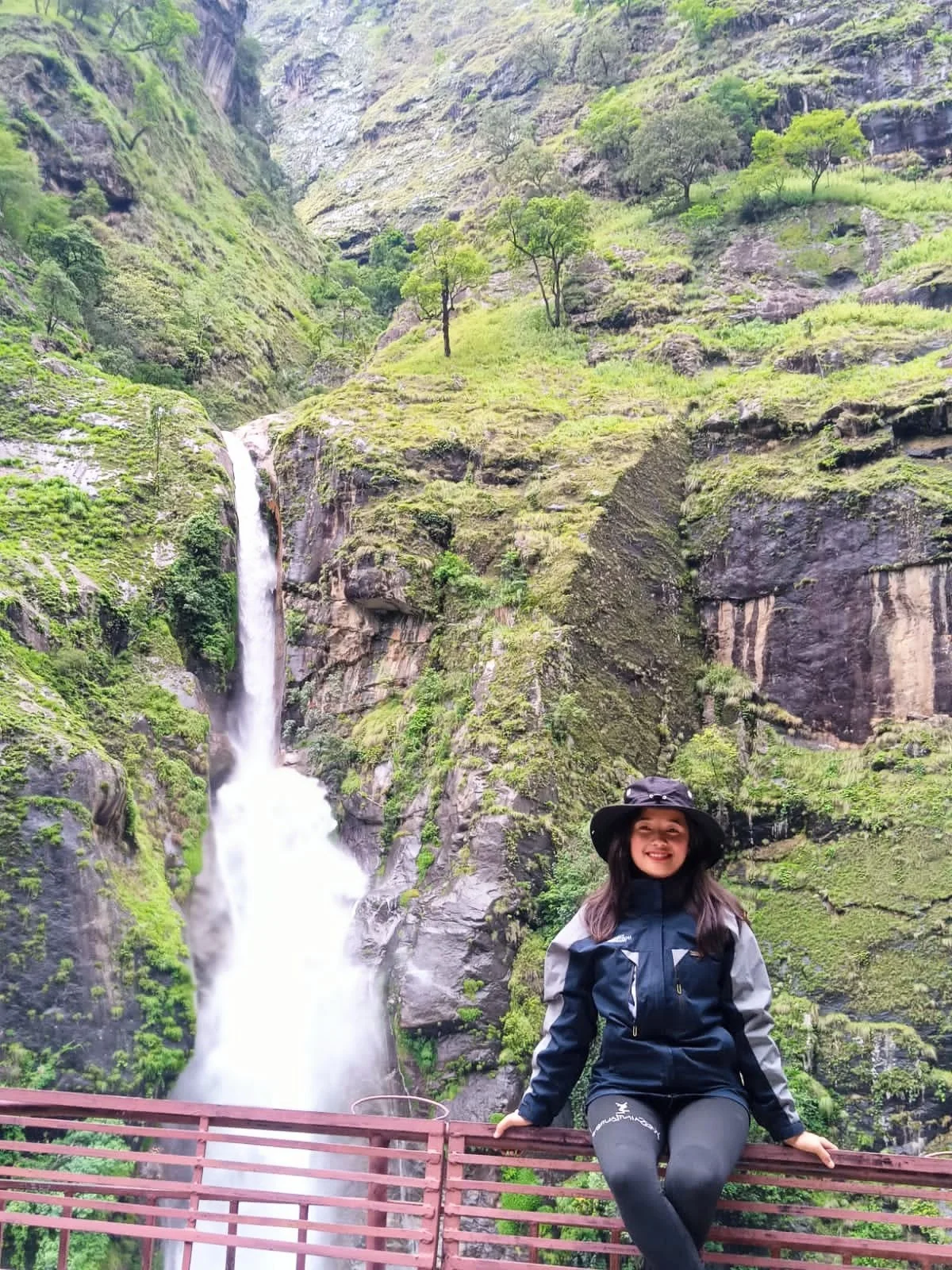
Natural streams and seasonal waterfalls add to the atmosphere of the upper valley, particularly during periods of rainfall and snowmelt.
The journey generally takes approximately two hours under favourable trekking conditions, although longer durations may be necessary depending on weather, individual pace and trail accessibility.
Beyond Hinku Cave, the terrain remains rugged as trekkers approach the accommodation settlement of Deurali.
The cumulative effect of increasing altitude, colder air and changing surroundings makes this section noticeably different from the lower forest pathways around Bamboo and Dovan.
Hinku Cave — Deurali's Historical Neighbour
One of the most distinctive natural attractions near Deurali is Hinku Cave, a prominent rock overhang encountered shortly before reaching the settlement.
Historically associated with temporary shelter during earlier Himalayan trekking journeys, Hinku Cave offers a reminder of mountain travel before modern accommodation facilities became widely established throughout the region.
The landmark is particularly striking because of its large projecting rock formation and steep geographical surroundings.
Unlike Deurali, Hinku Cave does not provide established modern accommodation or hospitality facilities.
Travellers should appreciate the landmark from safe locations along the trekking pathway rather than attempting to explore unstable rock surfaces or use the shelter for overnight accommodation.
Its proximity adds historical and geological interest to the approach towards Deurali.
The Upper Modi Khola Valley
The Modi Khola Valley forms the geographical heart of the Annapurna Base Camp trekking corridor.
Beginning within the high mountain environments of Annapurna Sanctuary, the river system transports water through steep valleys, rocky gorges and forested landscapes towards the lower Annapurna foothills.
Around Deurali, the valley takes on an increasingly rugged appearance.
The surrounding slopes become more exposed, while mountain streams and seasonal waterfalls descend through steep natural channels.
The settlement's geographical setting offers an intimate experience of Himalayan mountain environments, where visitors can appreciate the immense scale of surrounding cliffs rather than relying exclusively on distant panoramic summit views.
This section of the Modi Khola Valley represents one of the most memorable landscape transitions of the entire Annapurna Base Camp Trek.
Bagar and the Upper Valley
Beyond Deurali, the trekking pathway continues through the upper Modi Khola Valley towards the area commonly identified as Bagar, at approximately 3,300 metres.
This section introduces increasingly open terrain, rocky river deposits and mountain slopes shaped by long-term natural processes.
Bagar serves as a geographical reference along the onward route rather than a major permanent settlement or dependable overnight accommodation destination.
The surrounding landscape demonstrates the changing character of the valley as trekkers approach the higher mountain basin.
Trail alignment may vary according to seasonal conditions, river crossings and temporary route diversions.
Travellers should follow established pathways and current local safety guidance rather than attempting to create shortcuts across exposed slopes or riverbeds.
From Mountain Woodland to Alpine Terrain
One of Deurali's defining characteristics is its position near the transition between forested mountain environments and the increasingly alpine landscapes of Annapurna Sanctuary.
At lower elevations, the trekking pathway is surrounded by bamboo groves, rhododendron woodland, ferns, mosses and other forest vegetation.
Around Deurali, colder temperatures and greater exposure gradually influence the density and character of plant life.
Hardy shrubs, mountain grasses and scattered vegetation become increasingly prominent farther along the valley.
As trekkers continue towards Machhapuchhre Base Camp, open rocky terrain and glacial features become characteristic elements of the landscape.
This ecological transition offers a rewarding opportunity to experience several distinct Himalayan environments within a single trekking journey.
Mountain Scenery Around Deurali
Deurali is distinguished more by its dramatic valley setting than by uninterrupted panoramic mountain views.
The surrounding cliffs, steep ridgelines and exposed mountainsides create an impressive sense of scale.
Depending on atmospheric conditions and viewing position, travellers may glimpse sections of the higher Himalayan landscape beyond the valley.
However, the expansive mountain panoramas associated with Annapurna I, Annapurna South, Hiunchuli and Machhapuchhre become considerably more prominent farther uphill towards Machhapuchhre Base Camp and Annapurna Base Camp.
This gradual revelation of the mountain scenery contributes to the anticipation experienced during an overnight stay in Deurali.
Waterfalls and Mountain Streams
Natural waterways contribute significantly to the geographical character of Deurali and the surrounding upper Modi Khola Valley.
Water descending from higher mountain environments flows through steep channels, rocky slopes and seasonal waterfalls.
During warmer months and periods of increased rainfall, these features can become particularly noticeable.
The combination of moving water, exposed cliffs and changing cloud formations creates a distinctive mountain atmosphere.
However, increased water flow can also affect trekking conditions.
Travellers should remain on established pathways and avoid approaching unstable stream banks or exposed waterfalls for photographs.
The waterways are an important component of the surrounding mountain ecosystem and should be protected from pollution and unnecessary disturbance.
Biodiversity Around Deurali
The Annapurna Conservation Area supports remarkable ecological diversity across its subtropical, temperate and high-altitude environments.
Deurali occupies an intermediate geographical position where vegetation increasingly reflects the challenges of colder mountain conditions.
Hardy shrubs, grasses and other native plants survive across suitable sections of the surrounding landscape.
Mountain birds may be observed along quieter sections of the trekking pathway, while the forested environments below Deurali provide habitats for a broader range of wildlife.
Specific wildlife sightings cannot be guaranteed.
The ecological significance of Deurali lies largely in the opportunity to observe how Himalayan habitats change with increasing elevation and environmental exposure.
Visitors should avoid disturbing wildlife, collecting native plants or leaving established trekking pathways.
Mountain Teahouses and Accommodation
Deurali is primarily a trekking lodge settlement rather than a large traditional agricultural village.
Its accommodation facilities have developed to serve travellers undertaking the Annapurna Base Camp Trek.
Mountain teahouses provide essential services in an environment where road access is unavailable and supplies must be transported through challenging mountain terrain.
Typical accommodation consists of simple bedrooms, communal dining rooms and basic shared facilities.
Services such as hot showers, internet connectivity, electrical charging and room heating vary according to individual accommodation providers and seasonal operating conditions.
The limited number of lodges makes advance accommodation coordination particularly valuable during popular trekking seasons.
Travellers should approach their stay with realistic expectations, recognising that hospitality at this elevation prioritises shelter, warmth and essential services over conventional hotel luxury.
Dining and Mountain Hospitality
The communal dining rooms of Deurali's trekking lodges provide welcoming spaces for travellers to rest after ascending through the upper Modi Khola Valley.
Traditional Nepalese dal bhat remains a common meal, alongside noodle dishes, soups, potatoes, rice-based meals and hot beverages.
Food availability may vary depending on seasonal supply arrangements.
The remoteness of the settlement means that transporting ingredients, fuel and other essential supplies requires considerable logistical effort.
A warm meal in Deurali therefore represents not only a comfortable part of the trekking experience but also the contribution of local hospitality workers who sustain tourism throughout the mountain corridor.
Vegetarian meals are particularly common along the upper Annapurna trekking route.
Travellers should consult their guides and accommodation providers regarding traditional dietary customs associated with the sacred mountain landscape.
An Overnight Experience in Deurali
An overnight stay in Deurali differs considerably from accommodation experiences in lower destinations such as Ghandruk and Chhomrong.
The settlement's high-altitude geographical setting creates a quieter, more remote mountain atmosphere.
As daylight fades, temperatures can decrease rapidly across the exposed valley.
Travellers typically spend the evening resting in communal dining spaces, preparing trekking equipment and discussing onward weather and trail conditions.
The following morning provides an opportunity to continue towards Machhapuchhre Base Camp when local conditions permit.
Deurali's appeal lies in this simple mountain experience: a place to recover from the day's ascent while preparing for the increasingly spectacular landscapes ahead.
Deurali and Acclimatisation
Deurali provides a useful intermediate accommodation point for managing sleeping elevation on the approach to Annapurna Base Camp.
An overnight stay at approximately 3,200 metres can help avoid some of the larger elevation increases associated with compressed trekking itineraries.
Nevertheless, sleeping at Deurali does not guarantee protection against altitude sickness.
The preceding trekking stages, individual physiological response, walking pace and onward sleeping elevation remain important considerations.
From Deurali to Machhapuchhre Base Camp, the net elevation increase is approximately 500 metres.
Continuing directly from Deurali to Annapurna Base Camp increases sleeping elevation by approximately 930 metres, which exceeds the commonly recommended daily increase above 3,000 metres.
For travellers requiring a more gradual approach, an additional overnight stay at Machhapuchhre Base Camp may be appropriate.
Anyone experiencing symptoms of altitude sickness should avoid further ascent until symptoms resolve. Worsening symptoms require descent and appropriate medical assessment.
Avalanche Awareness Around Deurali
The trekking corridor surrounding Deurali contains sections susceptible to seasonal avalanches and rockfall.
Steep mountainsides rise above the upper Modi Khola Valley, where snow can accumulate during colder periods.
Following heavy snowfall or changing mountain conditions, unstable snow may descend into exposed sections of the trekking route.
The area around Hinku Cave and the onward route towards Machhapuchhre Base Camp require particular attention.
Avalanche risk cannot be determined by the calendar alone, and favourable weather at the settlement does not necessarily indicate stable conditions across higher slopes.
Travellers should obtain current local assessments, respect temporary trail closures and follow professional trekking guidance.
Alternative pathways should only be used when they are officially established or assessed as appropriate by experienced local professionals.
Flexible itineraries are particularly valuable during periods of unstable mountain conditions.
Spring in Deurali — March to May
Spring is one of the principal trekking seasons in the Annapurna region.
The journey towards Deurali may feature colourful rhododendron blossoms in lower forested environments, while higher mountain slopes can retain seasonal snow.
Gradually warming temperatures contribute to an increasingly active landscape of mountain streams and waterfalls.
The contrast between flowering woodland and snow-covered Himalayan terrain is especially rewarding for travellers interested in experiencing diverse natural environments.
However, accumulated winter snow and changing spring temperatures may influence avalanche conditions.
Current local assessments remain essential before trekking beyond Deurali.
Autumn in Deurali — September to November
Autumn generally offers some of the most favourable conditions for travelling through the upper Annapurna region.
Following the main monsoon season, rainfall typically decreases and mountain visibility often improves.
October and November are particularly popular for Annapurna Base Camp trekking.
The atmosphere around Deurali becomes noticeably cooler, especially during mornings and evenings, while the surrounding cliffs and mountain landscapes can appear particularly dramatic under clear conditions.
Residual monsoon weather may persist during early September.
Travellers should prepare for cold overnight temperatures even during otherwise favourable autumn trekking conditions.
Winter in Deurali — December to February
Winter transforms the upper Modi Khola Valley into a significantly colder mountain environment.
Snow accumulation may affect the settlement, nearby trekking pathways and surrounding mountain slopes.
Accommodation availability can become more limited, while icy conditions and seasonal avalanche hazards may complicate onward travel.
Winter trekking requires suitable insulated equipment, careful itinerary planning and professional assessment of current mountain conditions.
Access to Machhapuchhre Base Camp and Annapurna Base Camp cannot be guaranteed during periods of heavy snowfall.
Although winter landscapes can be exceptionally beautiful, safety must remain the primary consideration.
Monsoon in Deurali — June to September
The monsoon season introduces increased rainfall, cloud cover and flowing mountain streams throughout the Annapurna region.
The lower trekking corridor becomes particularly lush, while mist and cloud formations create atmospheric scenery around Deurali.
However, prolonged rainfall may contribute to slippery pathways, swollen streams, rockfall and landslides.
Reduced visibility can also affect the ability to assess surrounding mountain conditions.
Travellers undertaking monsoon trekking should maintain flexible schedules and confirm current route accessibility before continuing through the upper valley.
Deurali and the Sacred Annapurna Landscape
Deurali lies within the broader cultural and spiritual landscape of the Annapurna Himalayas.
The Annapurna massif is associated with the Hindu goddess of nourishment and abundance, while Machhapuchhre is widely recognised as a sacred mountain.
The surrounding region also reflects indigenous Gurung traditions and longstanding cultural relationships with mountain environments.
Although Deurali itself functions primarily as a trekking accommodation settlement rather than an established religious destination, its location along the approach to Annapurna Sanctuary connects it with these wider cultural traditions.
Visitors should respect locally observed dietary customs, natural features and spiritual interpretations of the mountain landscape.
The journey towards Annapurna Base Camp is an opportunity to appreciate both the physical grandeur of the Himalayas and their significance to surrounding communities.
Photography Opportunities in Deurali
Deurali offers distinctive photographic opportunities for travellers interested in Himalayan landscapes, mountain hospitality and geological formations.
Unlike expansive mountain viewpoints such as Poon Hill, Deurali's visual appeal centres on its enclosed valley setting and rugged natural environment.
Photographic subjects may include:
Mountain lodges beneath towering cliffs.
Seasonal waterfalls flowing across rocky slopes.
Mist drifting through the upper Modi Khola Valley.
Snow-covered ridgelines during colder months.
Rocky trekking pathways towards Annapurna Sanctuary.
Changing vegetation along the mountain corridor.
Warm communal lodge interiors, with appropriate permission.
Photography should always take place from safe locations.
Avoid entering unstable terrain or remaining within exposed areas solely to capture photographs.
Deurali to Machhapuchhre Base Camp
The onward journey from Deurali to Machhapuchhre Base Camp introduces travellers to an increasingly open high-altitude mountain environment.
Machhapuchhre Base Camp is situated at approximately 3,700 metres above sea level.
The pathway follows the upper Modi Khola Valley through rocky terrain, past the Bagar area and towards the entrance of the higher mountain basin.
The net elevation gain is approximately 500 metres.
Walking typically requires around two to four hours, depending on route conditions, individual pace and seasonal circumstances.
As trekkers approach Machhapuchhre Base Camp, the surrounding mountain scenery becomes increasingly expansive.
Established mountain lodges provide accommodation beneath the magnificent landscapes surrounding sacred Machhapuchhre.
For travellers following a gradual acclimatisation itinerary, spending the night at Machhapuchhre Base Camp can provide an intermediate stage before the final ascent to Annapurna Base Camp.
Deurali to Annapurna Base Camp
Annapurna Base Camp lies at approximately 4,130 metres within the spectacular natural amphitheatre of Annapurna Sanctuary.
The route from Deurali continues through Machhapuchhre Base Camp before ascending across open alpine terrain towards the final destination.
The total net elevation difference is approximately 930 metres.
As travellers progress beyond Machhapuchhre Base Camp, the mountain scenery expands dramatically, revealing an extraordinary collection of Himalayan peaks.
Depending on weather and visibility, the surrounding landscape may include Annapurna I, Annapurna South, Hiunchuli, Machhapuchhre and other prominent mountains of the Annapurna massif.
The journey represents a remarkable contrast to the enclosed woodland and rocky valley environments encountered below Deurali.
Although some itineraries complete this ascent in a single day, a staged approach through Machhapuchhre Base Camp is preferable for travellers requiring a more gradual increase in sleeping elevation.
Deurali on the Return Journey
After experiencing Annapurna Base Camp, most trekkers descend through the same upper valley corridor.
Passing Machhapuchhre Base Camp and Deurali, travellers gradually return towards Himalaya Hotel, Dovan and Bamboo.
The changing landscape becomes apparent in reverse.
Open alpine terrain gives way to rugged valley slopes, followed by increasingly dense woodland and warmer conditions at lower elevations.
Deurali provides a useful intermediate point for refreshments or overnight accommodation when required.
Descending trekkers should remain attentive to uneven pathways, seasonal hazards and the cumulative physical demands placed on knees and ankles during extended downhill walking.
Responsible Tourism and Conservation
Deurali lies within the Annapurna Conservation Area, where protecting natural ecosystems and supporting sustainable community livelihoods remain important priorities.
Increasing trekking activity places additional pressure on mountain accommodation, water supplies, fuel resources and waste management systems.
Visitors can contribute to conservation by carrying reusable water bottles, minimising disposable packaging and avoiding unnecessary consumption of natural resources.
Personal rubbish should be transported to appropriate disposal facilities.
Travellers should remain on established pathways, protect surrounding vegetation and avoid disturbing mountain wildlife.
Supporting responsibly operated accommodation businesses and trekking services contributes to the livelihoods of communities involved in maintaining the Annapurna trekking corridor.
What Makes Deurali Different from Other Annapurna Trekking Stops?
Each settlement along the Annapurna Base Camp Trek offers a distinctive experience.
Ghandruk is celebrated for its Gurung cultural heritage and traditional architecture.
Chhomrong provides established village hospitality and expansive Himalayan scenery.
Bamboo and Dovan are characterised by dense forest, mountain streams and secluded valley environments.
Himalaya Hotel introduces travellers to the increasingly rugged upper mountain corridor.
Deurali distinguishes itself through its transitional geographical setting, remote mountain atmosphere and strategic position immediately below the higher landscapes of Annapurna Sanctuary.
It is where the approaching alpine environment becomes increasingly apparent and where careful preparation for higher elevations takes on greater importance.
Experience Deurali with Himalayan Trek Ventures
At Himalayan Trek Ventures, we believe that the most rewarding Himalayan journeys are shaped by the landscapes, communities and meaningful experiences encountered between major destinations.
Deurali represents an important stage of the Annapurna Base Camp Trek, connecting the forested valleys of the lower Annapurna region with the magnificent high-altitude landscapes of Annapurna Sanctuary.
Our approach emphasises carefully paced trekking stages, responsible mountain exploration, appropriate acclimatisation and respect for changing environmental conditions.
With thoughtful preparation and experienced local guidance, travellers can appreciate Deurali not simply as an overnight accommodation stop but as a distinctive chapter of their Himalayan adventure.
From towering valley cliffs and traditional mountain hospitality to the anticipation of entering Annapurna Sanctuary, Deurali offers a memorable experience on one of Nepal's most extraordinary trekking routes.