

Top 5 Adventures in Nepal
Did you know that among the 1 million travelers who visited Nepal in 2025, more than 24 percent came with a specific goal to experience unique adventures in Nepal?
And, the Himalayan nation, home to 8 of the world’s 14 highest mountains, doesn’t disappoint as well. From trekking in regions like the Annapurna to unique water sports and adventure activities, Nepal truly has no limits.
In fact, for trekkers, this peaceful nation is nothing short of heaven. With 35+ official trekking routes, every terrain and difficulty level is right at your fingertips.
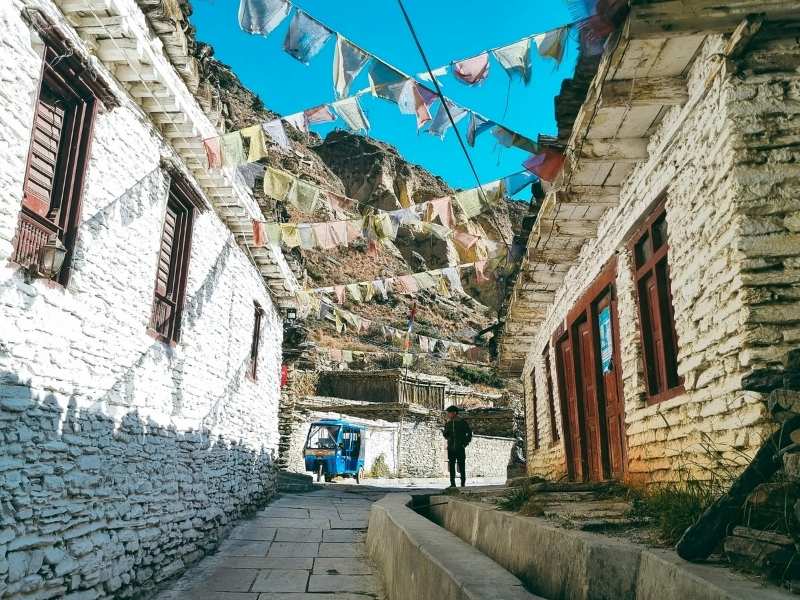
But wait, there’s more. This naturally gifted land is also a playground for water sports like white-water rafting and high-adrenaline activities such as bungy jumping and paragliding.
However, let’s be honest: experiencing every activity Nepal offers would take years. And realistically, you won’t be able to fit all of that into your very first trip.
So today, we’re bringing you the top 5 adventures in Nepal you can complete in 30 days.
And yes, these activities will absolutely satisfy your thrill cravings.
1. Trekking In the Everest Region
Now, we all know Nepal is home to Mt. Everest (8,848.86 m), the highest mountain in the world. While an expedition to Sagarmatha demands advanced technical climbing skills and a huge time commitment, getting a close-up view is actually much easier.
In only 12 days of trekking in the Khumbu region, you can reach all the way to Everest Base Camp and enjoy uninterrupted views of the world’s highest peak. Along the way, you’ll also get the first taste of centuries-old Himalayan tradition and culture.
Furthermore, if you allocate a few more days, you can also visit Gokyo Lake or the Three Passes. Wandering around these valleys will help you capture the true essence of the Himalayas.
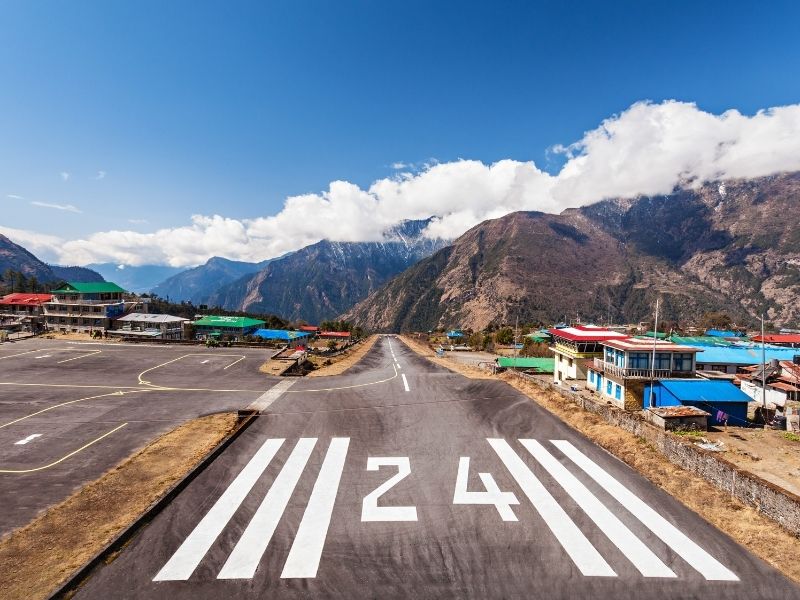
Talking about the journey, it starts with an iconic flight to Lukla, which normally takes about 20 to 25 minutes. From then on, you can follow the slow altitude gain of 300 to 500 m per day, which will help you reduce the AMS risk.
Every year, more than 35,000 trekkers pass through iconic points like Namche Bazaar (3,440m), Tengboche Monastery (3,867m), and Kala Patthar (5,545m), which is why this is one of Nepal’s most popular high-altitude destinations.
Things To Remember for Beginners During the Everest Region Trekking
Now, since this might be your first time, here are the things that you need to remember:
| Facts To Remember | Details |
| Best Time | Mar to May OR Sep to Nov |
| Major Destinations | Everest Base Camp, Gokyo, Three Passes |
| Highest Point | Kala Patthar at 5,545m |
| Permits | Sagarmatha National Park Permit, Khumbu Region Permit |
| Difficulty | Moderate to Challenging |
However, if this is your first time, you need to remember that during peak season, it is going to be crowded. And, since you are going to trek well above 3,500 m, there is always going to be a threat of altitude sickness.
In fact, on every trek we run in the Khumbu region, our guides are trained to stay alert and keep an eye on each trekker’s safety and well-being.
2. Annapurna Circuit Trek
Once you finish your Everest trek and return to Lukla, your journey to the Annapurna Region is actually really simple.
First, you’ll arrive in Kathmandu via Tenzing-Hillary Airport, and then you can take another quick flight to Pokhara, the important gateway to begin the Annapurna Circuit.
From the first step of this journey, you’ll experience the transition from the high-altitude Himalayan drama of Everest to the sheer diversity of the lush subtropical forests of the Annapurna Region.
And yes, the famous Annapurna Base Camp trek offers a similar mix of environments, but it doesn’t provide exposure to the unique rain-shadow regions of Manang and Mustang, which lie at an altitude of around 3,500 m.
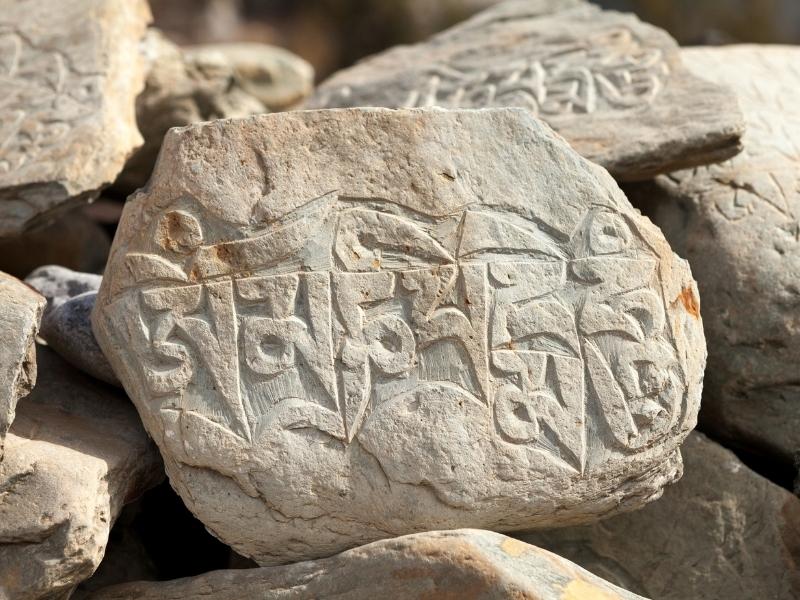
Additionally, you can experience all this diversity within just 13 days. Within those days, you’ll cover roughly 160 km, but if you include side trips to Ice Lake (4,600 m) or Tilicho Lake (4,919 m), the total trekking distance can shoot up to 230 km.
Talking about its journey, it starts by taking a scenic jeep ride from Pokhara to Besisahar. Then, via Manang, you’ll continue toward Yak Kharka (4,050 m), Thorong Phedi (4,540 m), and finally cross the legendary Thorong La pass.
On your return, you will also visit the sacred pilgrimage site of Muktinath (3,760 m).
But that’s not all. Trekking in the Annapurna region also comes with uninterrupted views of Annapurna I (8,091 m), known as Nepal’s deadliest peak.
Things To Remember During the Annapurna Circuit Trek
For the first timers, here are a few things that they need to keep in mind:
| Facts To Remember | Details |
| Best Time | Mar to May OR Sep to Dec |
| Major Destinations | Manang, Thorong La Pass, Muktinath, Jomsom |
| Highest Point | Thorong La at 5,416 m |
| Permits | ACAP Permit, TIMS Card |
| Difficulty | Moderate to Challenging |
Besides the benefits, there are also a few challenges that every trekker faces. Since the trails get windy after 11 AM, especially near Yak Kharka and Thorong Phedi, one needs to complete these sections as early as they can.
In fact, whenever we organize the Annapurna Circuit Trek, we make sure our trekkers cross Thorong La Pass and return before the strong winds begin.
3. Paragliding in Pokhara
After completing two long-distance treks back-to-back, it’s time for an adventure that gives you a thrill without demanding weeks of physical effort. And nothing captures that feeling better than paragliding in Pokhara, one of the top commercial paragliding destinations in the world.
Furthermore, after completing the Annapurna Circuit trek, you had to return to Pokhara anyway, which means flying back and forth for now.
The journey begins from Sarangkot (1,600 m), a hilltop located just 25–30 minutes from Pokhara Lakeside. From here, you’ll take a short run and lift off into the sky, flying anywhere between 20 to 30 minutes, depending on the thermal conditions.
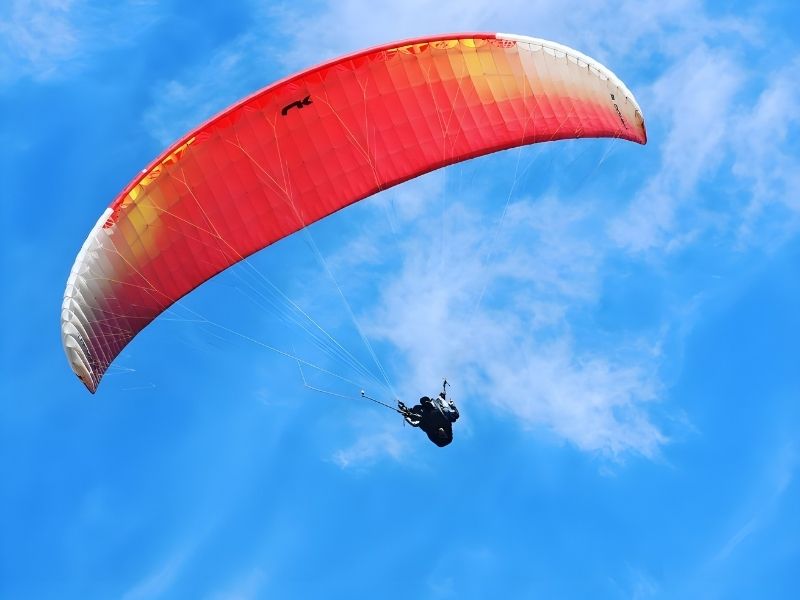
During the flight, you’ll hover above Phewa Lake, glide past hilltop villages, and enjoy views of three major Himalayan giants: Annapurna (8,091 m), Machapuchare (6,993 m), and Lamjung Himal (6,983 m).
And here’s the best part: this adventure requires zero prior experience. Even if you have never tried any aerial activity before, a certified pilot will control the flight, leaving you free to enjoy the scenery.
The average altitude gain during the flight is around 200 to 500 m, giving you enough height to experience true Himalayan thermals without going into advanced paragliding zones.
Plus, the weather in Pokhara remains stable for most of the year. Light winds between 5 to 12 km/h make takeoffs safe and smooth, especially between October and April, which is considered the ideal flying season.
Here are the important things to remember:
Things To Remember During Paragliding In Pokhara
| Things To Remember During Paragliding In Pokhara | Details |
| Best Time | Sep to Apr |
| Flight Duration | 20–30 minutes |
| Takeoff Point | Sarangkot at 1,600 m |
| Average Altitude Gain | 200–500 m |
| Permits | None required |
| Difficulty | Easy |
Even though the activity is beginner-friendly, the weather can sometimes cause delays, especially during the monsoon or on windy afternoons. So, we always suggest booking a morning flight, where the skies are clearer, and visibility of the Annapurna range is at its best.
4. Seti River White-Water Rafting
Once you’ve enjoyed the clear skies of Pokhara, you can dive straight into Nepal’s water-adventure scene, and the Seti River is the perfect place to start. This is one of the few white-water rafting experiences in Nepal that you can complete within a single day, making it an ideal follow-up activity after paragliding in Pokhara.
The rafting route usually begins from Hemja, located just 20 to 25 minutes from Pokhara Lakeside. From here, you’ll raft for 1.5 to 2 hours along a 7 to 10 km stretch, depending on seasonal water levels.
But remember, the Seti River may look calm on the surface, but it features exciting Class II and Class III rapids, which are beginner-friendly yet thrilling enough to give you a proper white-water experience.
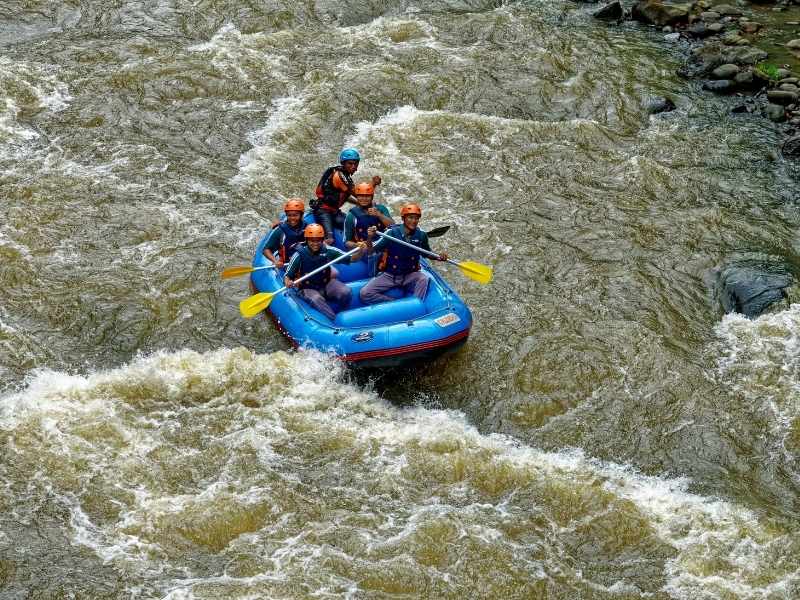
A major highlight of the Seti is its incredibly narrow gorges. In several sections, the river flows between canyon walls only a few meters apart, giving you the feeling of entering a hidden world carved entirely by water. And because the Seti originates from the Machapuchare (Fishtail) Glacier, the water here stays cold and refreshing, especially during the spring and autumn months.
But what makes it truly wonderful is that this adventure requires no prior rafting experience, and you’ll be guided by licensed river experts who carry safety gear like life jackets, helmets, throw bags, and rescue ropes.
In fact, over 70 percent of participants on the Seti River cannot swim, which shows how accessible this activity truly is.
Here are the important details you should keep in mind:
Things To Remember Before Paragliding In Pokhara
| Data Point | Details |
| Best Time | Oct to Jun |
| Rafting Duration | 1.5 to 2 hours |
| Distance Covered | 7 to 10 km |
| Starting Point | Hemja (near Pokhara) |
| Rapid Grade | Class II and III |
| Difficulty | Easy to Moderate |
Since this is a glacier-fed river, the water can be quite cold, especially during early mornings. So, we always advise wearing quick-dry clothing and avoiding cotton fabrics. And because the activity is short and accessible, it fits perfectly into your itinerary as a same-day adventure after paragliding, which makes your Pokhara stay both thrilling and efficient.
Additionally, now you have explored both the Himalayan and the Hilly regions of Nepal. Now all that remains for you is to explore the thrilling Terai Region of Nepal.
5. Adventure Activities In Chitwan
After exploring both the Himalayan and Hilly regions of Nepal, the only thing left to complete your 30-day adventure is experiencing the Terai region. This warm, wildlife-rich flatland feels completely different from everything you’ve seen so far. And the best place to begin is Chitwan National Park, Nepal’s first national park and a UNESCO World Heritage Site.
From Pokhara, you can take a short 20–25 minute flight to Bharatpur Airport, followed by a 30–35 minute tuk-tuk ride to Sauraha.
Note: We strongly recommend choosing a tuk-tuk instead of a private car because it gives you a real taste of local Terai life.
Once you arrive in Sauraha, your jungle adventure begins immediately. Chitwan National Park covers 952 sq. km of protected land and is home to more than 700+ one-horned rhinoceroses, 128 Bengal tigers, and over 540 species of birds, making it one of the richest wildlife zones in Asia.
The highlight of your Chitwan experience is the Jeep Safari, where you’ll travel 20 to 30 km deep into the forest to explore grasslands, riverbanks, and sal forests.
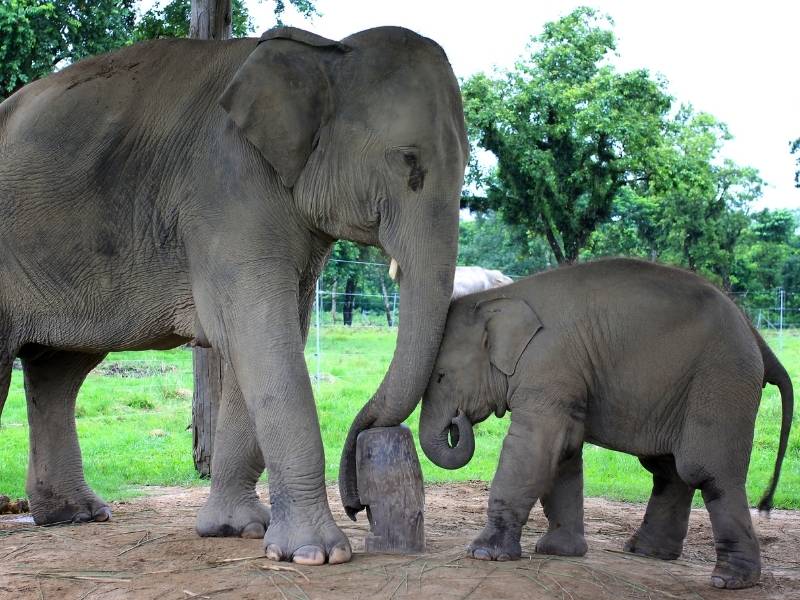
But your adventure doesn’t end there. The traditional canoe ride along the Rapti River offers close-up views of marsh mugger crocodiles, gharials, and hundreds of wading birds. And finally, the guided jungle walk lets you experience Chitwan’s wildlife on foot, which makes it one of the most immersive activities in the entire Terai region.
Here are the important details you need to remember:
Things To Remember During the Chitwan Tour
| Data Point | Details |
| Best Time | Oct to Mar |
| Distance From Pokhara | 20 to 25 min flight + 30 to 35 min on tuk-tuk |
| Activities | Jeep Safari, Canoe Ride, Jungle Walk |
| Wildlife Highlights | Rhinos, Tigers, Crocodiles, 540+ bird species |
| Permit | Chitwan National Park Entry Fee |
| Difficulty | Easy |
Even though these activities are beginner-friendly, you should stay alert during the jungle walk and follow your guide’s instructions at all times, as animal movements are unpredictable. Safaris are usually best in the early morning or late afternoon, when wildlife activity is at its peak and temperatures remain pleasant.
Bonus Day: Adventure Activities In Kathmandu
After completing 28 days of pure Himalayan, hilly, and Terai adventures, it’s only fair to end your journey with something relaxing yet meaningful. And the best place to do that is Chandragiri Hills, located just 10 km from central Kathmandu.
You can reach the base station by car within 30 to 40 minutes, and from there, the cable car takes only 8 to 10 minutes to transport you from 1,540 m to 2,551 m.
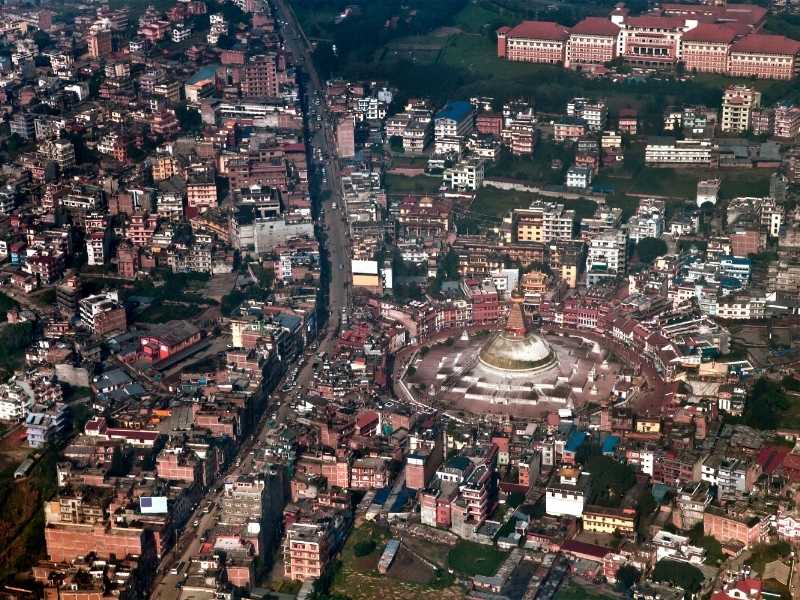
As the cabin rises, you’ll witness truly breathtaking views of the Kathmandu Valley, followed by an entire Himalayan lineup that includes Langtang (7,246 m) and Gauri Shankar (7,134 m). And guess what !! These are the Himalayas that were missing in our previous journey.
Once you reach the top, you can visit the Bhaleshwor Mahadev Temple, enjoy a short walk, or simply sit back and watch the sun melt behind the hills. It’s the perfect “slow adventure” after nearly a month of intense activities.
Here’s everything you need to remember:
Things To Remember During the Kathmandu Tour
| Data Point | Details |
| Best Time | Year-round |
| Total Duration | 2 to 3 hours |
| Elevation | 2,551 m |
| Activity | Cable Car + Sunset Walk |
| Difficulty | Easy |
A quiet evening on Chandragiri gives you time to process everything, the treks, the rivers, the flights, the jungles, before heading back home.
30 Days Summarized Itinerary Adventures In Nepal
| Adventure Activity | Days Required |
| Leisure Day (Arrival in Kathmandu) | 1 day |
| Everest Region Trek | 12 days |
| Annapurna Circuit Trek (shortened) | 12 days |
| Paragliding in Pokhara | 1 day |
| Seti River Rafting | 1 day |
| Chitwan Safari + Canoe + Jungle Walk | 1 day |
| Bonus Adventure in Kathmandu | 1 day |
| Leisure Day (Departure) | 1 day |
| Grand Total | 30 Days |
Truly Unique Adventures In Nepal Are Waiting For You
And just like that, your 30-day Himalayan journey finally comes full circle. In one month, you’ve walked through the world’s most iconic trekking regions, crossed one of the highest mountain passes on the planet, flown beside the Annapurnas, battled glacier-fed rapids, and wandered through the warm, wildlife-filled plains of Nepal’s Terai. Very few countries allow you to experience such dramatic diversity within such a short span, and that’s exactly why Nepal attracts more than 1 million travelers every year.
At Himalayan Trek Ventures, our role is simple: make sure every step, every flight, every trail, and every moment feels safe, meaningful, and unforgettable. Because in the end, Nepal is not just a place to visit.
It’s a place to feel. A place to return to. A place that stays with you long after you leave.

