Nepal
Moderate
5,416m at Thorong La Pass


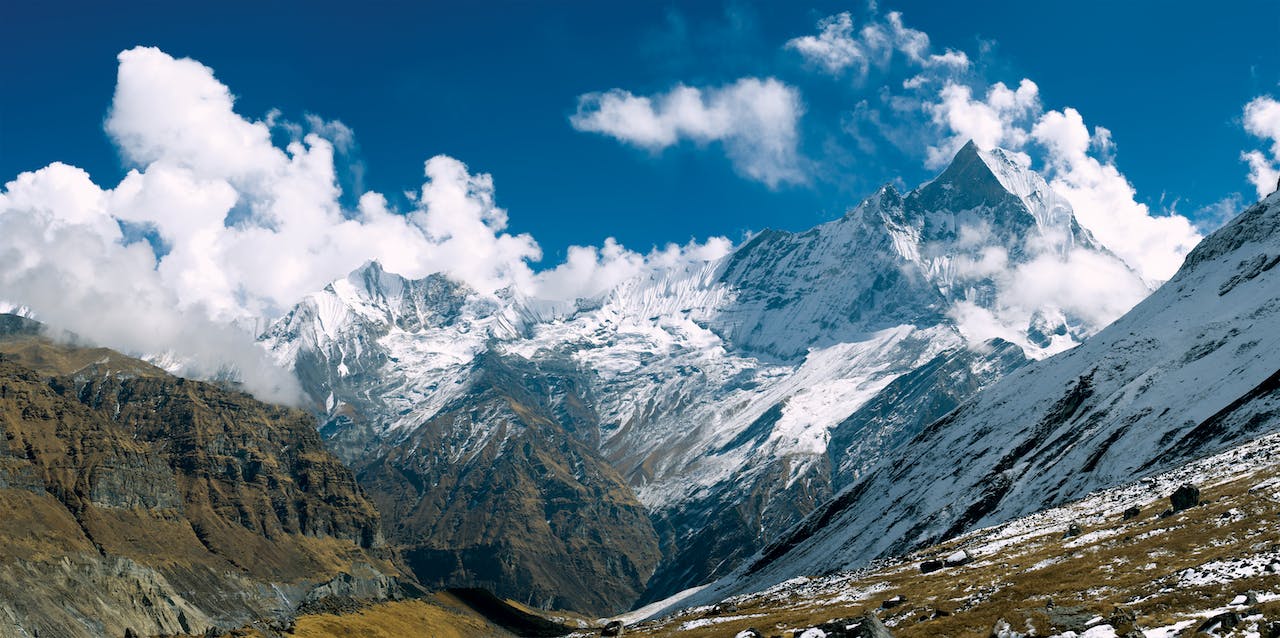
Imagine walking casually around the 7,629 sq. km Annapurna Conservation Area and suddenly you find yourself in between snow giants like Gangapurna and Macchapuchre. It’s the moments like these that make trekking in Annapurna region special.
Yes, climbing the nearby 7,000ers and 8,000ers is considered one of the toughest expedition challenges anywhere in the world. But trekking to their base camps, or walking up to 5,000 m, is surprisingly achievable for most trekkers.
In fact, the trails leading to these base camps are actually quite well-maintained with markers like painted symbols, wooden, and metal signposts scattered around the important places.
Furthermore, this region offers all kinds of routes, ranging from short and easy to long and hard. This basically means trekking in the Annapurna region is truly suited for every level of trekkers around the world.
But wait, those aren’t the only reasons that make trekking in this valley special.
The first reason for the Annapurna region being one of the best in Nepal is the sheer variety of landscapes that it offers.
From terraced land fields that neighbour rhododendron and pine forests to the glaciers that meet deep river valleys, within the timeframe of 5 to 12 days, the trail offers the experience of everything. As a matter of fact, this beautiful terrain’s changes at each altitude.
While wandering between 2,000 m and 3,000 m, you will find landscapes filled with dense forest and agricultural fields, and on the other hand, when you ascend above 4,000 m, the whole landscape shifts to rocky terrains with snowy fields.
Besides that, accessibility is also another major reason behind the high success rate of this valley. Unlike the Everest region, where costly domestic flights are the only option, in this area, the roads extend to Pokhara. Not just that, if you are willing to invest in a private jeep, it goes beyond Jomsom and Manang.
Other than the accessibility, this region is also quite beginner-friendly, the polar opposite of the expedition in this area. Even without prior mountaineering experience or any specialized equipment, you can reach Ghorepani Poon Hill, probably the easiest sunrise viewpoint with an altitude above 3,000 meters.
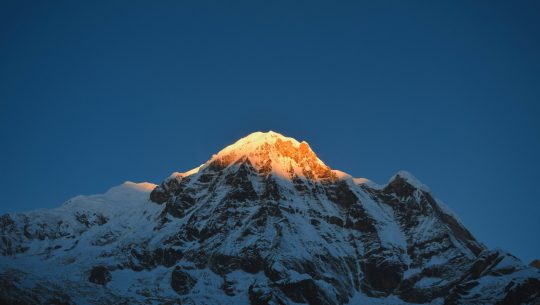
In fact, from the same area, you get the 360-degree view of snowy natural miracles like Annapurna I (8,091m), Annapurna South (7,219m), Dhaulagiri (8,167m), Machhapuchare (6,993m), and Nilgiri (7,061m). Even after all these years of trekking, our guides still get mesmerized when they see the gold-like view of the Annapurna Massif during the golden hour.
But from our travellers, we came to realize that even these aren’t the main highlights of the trekking in the Annapurna region.
As per them, they felt really close only after the culture immersion. Friendly Gurung and Magar communities in this area are more than happy to teach their old practices to anyone interested. They are always looking forward to giving travellers a taste of their local foods and festivals that have existed for centuries.
Ok, now that you understand why trekking in the Annapurna region feels special, let’s walk you through the major routes that make this possible.
Now, we need to be clear about something: there are eight well-established trekking routes in the Annapurna region that stay entirely below 5,000 meters. Each offers its own unique combination of scenery, difficulty, and cultural experiences.
But wait, before diving deep into each route, let us give you a quick overview so you can immediately identify which trek matches your interests and fitness level:
| Trek Name | Max Elevation | Difficulty Grade |
| Ghorepani Poon Hill | 3,210 m | Easy–Moderate |
| Mardi Himal | 4,500 m | Moderate |
| Khopra Danda | 3,660 m | Moderate |
| Annapurna Base Camp | 4,130 m | Moderate |
| Mohare Danda | 3,300 m | Moderate |
| Jomsom–Muktinath | 3,900 m | Easy–Moderate |
| Sikles | 1,980 m | Easy |
| Nar–Phu Valley | 4,110 m | Challenging |
Now, let us give you a clear idea of what each trekking region is actually known for:
But we know this mightn’t be enough, so allow us to cover some of those valleys in a little more detail.
Now, if you want to experience what makes Annapurna famous without pushing your body to extreme limits, Ghorepani Poon Hill is calling your name.
This 4 to 5-day trek reaches a maximum elevation of 3,210 meters at Poon Hill viewpoint, making it genuinely achievable for first-time trekkers in reasonable fitness.
Wait, let’s talk about why hundreds of trekkers wake up at 4:00 AM and hike in the dark to reach Poon Hill. The sunrise experience here offers something genuinely world-class: a view of glowing Himalayas lasting 15 to 25 minutes as dawn light touches Annapurna I, Dhaulagiri, Annapurna South, Machhapuchare, and Nilgiri one after another.
However, here’s something you should know: during peak seasons (April and October), this viewpoint can have 500-plus people gathered for sunrise. If crowds bother you, consider visiting in September or November when numbers drop by 50 to 75 percent.
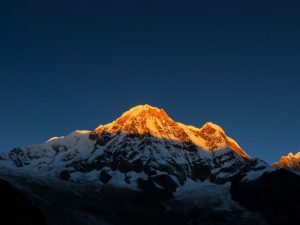
Now, if Poon Hill feels too crowded and you want genuine solitude while still experiencing dramatic mountain scenery, Mardi Himal offers the perfect alternative.
This 7 to 8-day trek reaches Mardi Himal Base Camp at 4,500 meters, providing the closest possible views of Machhapuchare (6,993m) without actually climbing the sacred mountain.
Wait, here’s the fascinating part: despite similar difficulty to Poon Hill and equally spectacular scenery, Mardi Himal sees only 20 to 30 trekkers daily compared to Poon Hill’s 200 to 400. This dramatic difference creates a peaceful mountain experience where trails feel genuinely remote.
The trek begins at Kande (30 to 45 minutes from Pokhara by jeep) and ascends steeply through subtropical forest transitioning to rhododendron woodland. After reaching Forest Camp at 2,500 meters on day three, the trail continues through progressively sparser vegetation to Low Camp (2,970m), High Camp (3,550m), and finally Base Camp (4,500m).
However, the summit day from High Camp to Base Camp demands serious effort. You’ll gain 900 meters of elevation over 3 to 4 hours on increasingly rocky terrain requiring occasional scrambling (though not technical rock climbing). Fixed ropes sometimes appear on exposed sections, though their presence varies year to year.
Additionally, lodges above Forest Camp remain extremely basic: squat toilets, no running water in rooms, thin blankets, and very cold nights. Limited food options exist (typically dal bhat, noodles, or egg-based meals), and water supplies can run short at High Camp during dry seasons.
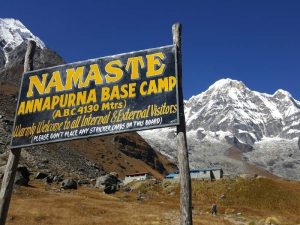
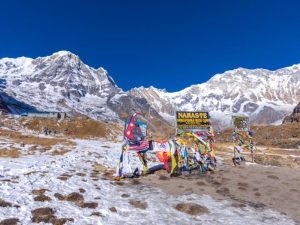
Ok, this can be termed as the most iconic trek in the entire region. Annapurna Base Camp (ABC) at 4,130 meters sits inside a unique geological surrounding where multiple 7,000 to 8,000-meter peaks tower directly above you.
Now, the Annapurna Sanctuary represents something genuinely special: a naturally blessed formation where you walk surrounded by the Annapurna Massif, creating 360-degree mountain walls.
The Modi Glacier feeds this valley, with glacial streams creating white water throughout the sanctuary. Sacred to both Hindu and Buddhist traditions, local populations respect this area as a holy site where spiritual significance matches natural beauty.
The standard 9 to 11-day itinerary follows this pattern: drive to Jhinu Danda (1,750m), trek through Sinuwa (2,360m) and Chhomrong (2,170m) into progressively higher elevations. Chhomrong represents the last major settlement, a large Gurung village with numerous teahouses sitting on a steep hillside.
From Chhomrong, the trail climbs significantly to Deurali (3,230m), where altitude begins affecting some trekkers noticeably. Sleep quality may be reduced, and mild headaches can appear.
The next day, reach Machhapuchare Base Camp (3,700m), where approximately 25 to 30 percent of trekkers experience mild Acute Mountain Sickness symptoms.
However, the final push to Annapurna Base Camp at 4,130 meters takes only 3 to 4 hours but feels longer due to altitude effects.
Now, if you want to combine trekking with supporting local communities directly while accessing a sacred high-altitude lake, Khopra Danda offers something unique.
This 8-to-10-day trek reaches Khopra Ridge at 3,660 meters, with an optional day excursion to sacred Khayer Lake at 4,700 meters.
Wait, here’s what makes Khopra different: unlike commercial trekking operations, the lodges along Khopra Danda are community-owned and operated. Profits support local villages directly, with 100 percent of lodge revenue staying locally rather than flowing to Kathmandu-based companies.
Local guides receive employment priority, meals feature locally-grown produce, and homestay options exist at several villages. This sustainable tourism model appeals strongly to eco-conscious trekkers who want their spending to benefit communities authentically.
Furthermore, the optional excursion to Khayer Lake represents the trek’s spiritual climax. This small alpine lake (approximately 100m × 50m) sits at 4,700 meters, fed by natural springs and revered by both Hindu pilgrims and Buddhists.
The ascent gains 1,040 meters of elevation over 4 to 5 hours of steep uphill scrambling on increasingly rocky terrain. No technical climbing occurs, but the combination of altitude, steep gradient, and loose rock creates a genuine challenge.
Additionally, the full moon of August brings Hindu pilgrim gatherings for ritual bathing and prayer ceremonies, offering unique cultural experiences if your timing aligns.
Mohare Danda Trek (3,300m):
Similar community-based model to Khopra, but reaching a lower maximum elevation. The 360-degree view from Mohare ridge combines the Dhaulagiri, Annapurna, and Manaslu ranges simultaneously. Significantly less crowded than Poon Hill while offering comparable views.
Duration: 7 to 9 days.
Jomsom-Muktinath Trek (3,900m):
Follows the Kali Gandaki Gorge, the world’s deepest gorge with 2,200-meter depth between Annapurna I and Dhaulagiri. Reaches the sacred Muktinath temple at 3,800 meters, considered a liberation gateway in Hindu tradition and a pilgrimage destination for Tibetan Buddhists. Accessible via domestic flight to Jomsom (25 minutes, USD 100 to 120) or jeep drive.
Duration: 6 to 8 days.
Sikles Trek (1,980m):
The shortest and most budget-friendly major Annapurna trek. Reaches the authentic Gurung village of Sikles with minimal tourist infrastructure, offering genuine cultural interactions. Optional Tara Top extension climbs to 3,056 meters for panoramic views. Perfect for limited time availability or weekend trekking.
Duration: 2 to 4 days
Nar-Phu Valley Trek (4,110m):
The most remote and culturally immersive option, requiring special restricted area permits (USD 75 to 100). Ancient Tibetan villages of Phu and Nar preserve medieval lifestyles, thousand-year-old monasteries, and traditional yak herding practices virtually untouched by modernity. Mandatory guide requirement and minimum two-trekker groups enforced.
Duration: 15 to 20 days
Every trek requires two permits:
However, Nar-Phu Valley adds a Restricted Area Permit costing USD 75 (December to August) or USD 100 (September to November), bringing the total permits to USD 115 to 145.
Spring Season (March to May)
April represents optimal spring conditions with 85 to 90 percent clear days, peak rhododendron blooms, and stable weather. However, this also brings peak crowds and elevated prices. May remains acceptable early in the month, but heat increases in lower elevations, and pre-monsoon haze reduces photography quality.
Autumn Season (September to November)
October offers arguably the best overall conditions: 90-percent-plus clear days, extraordinary atmospheric clarity, stable high-pressure systems, and comfortable temperatures. November continues excellent conditions with dramatically lower crowds but increasingly cold nights (dropping to -10°C at higher elevations).
Avoid These Periods
Winter (December to February) brings extreme cold, snow-covered trails, and widespread teahouse closures. Monsoon (June to August) creates daily rainfall, slippery, dangerous trails, aggressive leeches below 2,500 meters, and obscured mountain views 70 to 80 percent of days.
Now, we’ve walked you through the complete landscape of trekking options in the Annapurna region below 5,000 meters. The truth is, whether you choose the classic Poon Hill sunrise, the solitary Mardi Himal experience, the sacred Khayer Lake pilgrimage, or the cultural immersion of Nar-Phu Valley, this region offers something genuinely special.
The combination of accessibility (just hours from Pokhara), affordability (starting under USD 400), cultural richness (Gurung, Magar, Thakali, Tibetan communities), and spectacular scenery (360-degree mountain panoramas) makes Annapurna the world’s most democratic high-altitude trekking destination.
So, are you ready to walk between those snow giants and experience the Himalayan magic that draws trekkers back year after year? We, the team of Himalayan Trek Venture, are waiting for you to tick your bucket list.