
Nepal Bhutan 6 Days Tour With Tiger’s Nest Monastery
6 Day
Moderate
3,120m (Tiger's Nest)
Hotel
Plane/Bus/Car
1-50
March to May (Spring) & September to November (Autumn)
Highlights
- Nepal Bhutan tour offers a quick 65-minute scenic flight with aerial views of Everest and Lhotse.
- Experience the iconic Tiger’s Nest Monastery perched dramatically at 3,120 meters on a cliff face.
- Visit the stunning 51.5-meter tall Buddha Dordenma statue housing 125,000 smaller Buddha statues inside.
- Explore magnificent Punakha Dzong at the sacred confluence of Pho Chhu and Mo Chhu rivers.
- Witness traditional Bhutanese architecture at Rinpung Dzong, built entirely without nails or plans.
- Discover over 3,000 artifacts spanning 1,000 years of history at Bhutan’s National Museum.
Trek through pine forests and prayer flags during the challenging but rewarding Tiger’s Nest hike. - Experience Bhutan’s unique Gross National Happiness philosophy and High Value, Low Impact tourism model.
- Shop for authentic handwoven textiles and traditional crafts showcasing the Thirteen Traditional Arts.
- Enjoy comfortable 3-star accommodations with professional English-speaking guides throughout the journey.
Nepal Bhutan 6 Days Tour With Tiger’s Nest Monastery Introduction
Guess what! With a quick 65-minute flight, you can start a 6-day Nepal Bhutan tour and experience Bhutanese hospitality from the world-famous Tiger’s Nest Monastery.
In fact, even during the flight, you will get the aerial views of famous mountains like Everest, Lhotse, and many more.
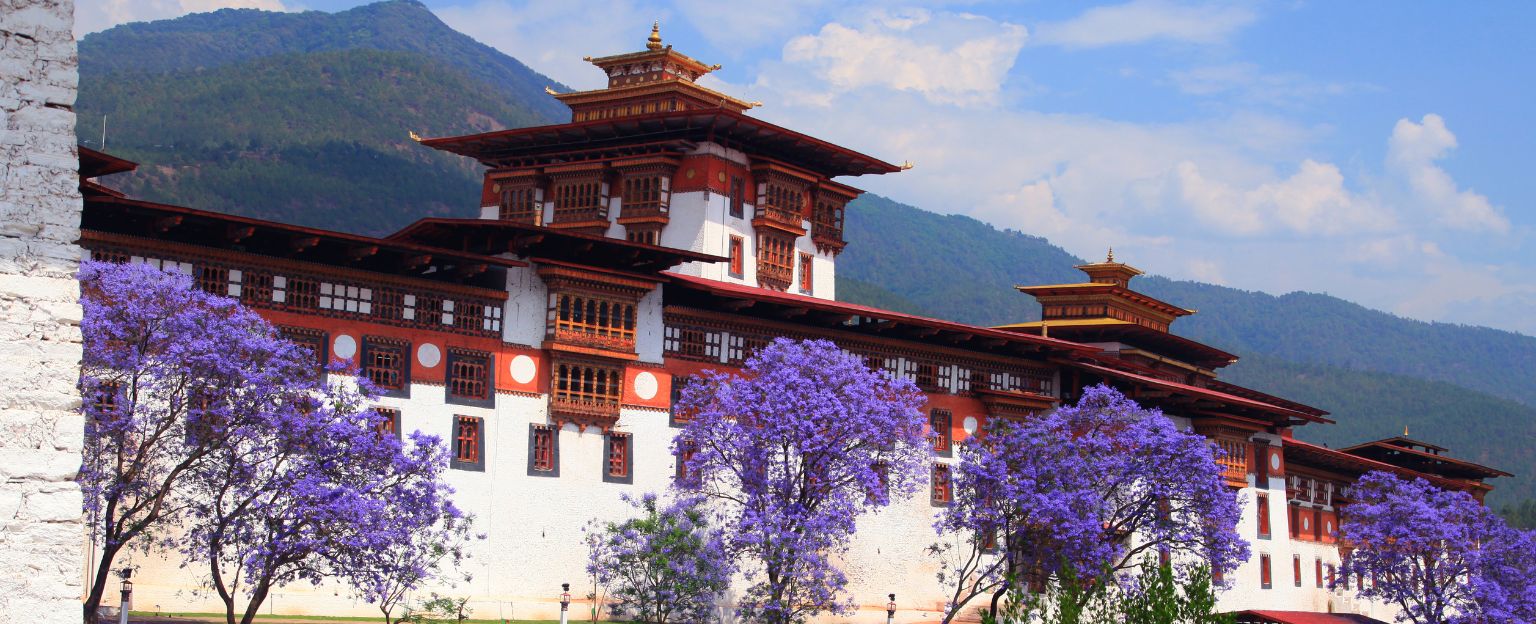
However, the real journey begins when you experience the red and white colored traditional architectures of paro valley.
Moreover, the first glimpse of terraced fields and prayer flags in the mountains shows why Bhutan is one of the world’s most preserved destinations.
In fact, during the tour, travellers can’t help but appreciate the country’s “High Value, Low Impact” model that ensures an authentic cultural experience while contributing to the kingdom’s welfare.
Reasons Why Bhutan Should Be on Your Bucket List
If the above given reasons aren’t enough, then let us go into detail on what makes Bhutan so special.
Firstly, the whole kingdom follows the revolutionary principle of their fourth king, Jigme Singye Wangchuck, called Gross National Happiness (GNH). From the 1970s, this principle has rested on 4 core principles: sustainable socio-economic development, environmental conservation, cultural preservation, and good governance.
This prioritization of the holistic well-being of citizens helps travellers feel proud as their visit directly supports the locals and environmental conservation programs through the Sustainable Development Fee. In Bhutan, you’re not just a tourist, but a person contributing to the preservation of one of the world’s most unique cultures. Noble, right?
Besides that, we Nepali share the same Mahayana Buddhist heritage especially through the Drukpa Kagyu school.
As a matter of fact, the first glance at Bhutan gives you the vibe of Sherpa Village.
Furthermore, we can completely resonate with the practice of Mahamudra that emphasizes recognizing the mind’s true nature through meditation.
In fact, just like in our Himalayas, we can see morning prayers and ritual activities embedded into their everyday routines.
Apart from the similar cultures, this trip also includes a visit to the Tiger’s Nest monastery that sits dramatically on a 3120 m cliff face. Built in 1692, it is one of the thirteen sacred “Tiger’s Nest” caves where Guru Rinpoche, practiced and taught Vajrayana Buddhism in the 8th century.
Now, let’s talk a little about how your itinerary is going to look like.
Outline Itinerary
- Day 1: Kathmandu to Paro (Flight and Paro Exploration)
- Day 2: Paro to Thimpu (65km, 1.5 to 2 hours)
- Day 3: Thimphu Full Day Exploration
- Day 4: Thimphu to Punakha Excursion and Return (75 km each way, 2.5 to 3 hours)
- Day 5: Thimphu to Paro, Tiger's Nest Monastery Hike
- Day 6: Paro to Kathmandu (Flight Back)
Detailed Itinerary
Day 1: Kathmandu to Paro (Flight and Paro Exploration)
Your adventure starts early morning at Tribhuvan International Airport in Kathmandu. From there you’ll board either Druk Air or Bhutan Airlines, the only carriers authorized to navigate Paro’s mountainous region.
Our flight departs at around 9:10 am, and by taking some of the best aerial mountain views, we will reach Bhutan in the next 65 minutes.
Pro Tip: Try to sit on the right side of the aircraft to see the best view of the Himalayas.
By 10:30 am, you will descend into Paro International Airport at 2,235 meters. While you grasp the views of terraced agricultural fields and Bhutanese architecture, our guide will greet you and help you through the immigration process.
After getting your visa stamped, we will head to Rinpung Dzong, the massive fortress that sits at 2,364 meters.
While exploring this building, you will realize that it was constructed entirely without nails or architectural plans. Fascinating, right?
Next, we visit Bhutan’s National Museum, also called Ta Dzong. Built in 1656, this circular eight-story structure houses more than 3000 artifacts.
Then, we will spend an evening in Paro exploring the local markets. The market features Bhutan’s Thirteen Traditional Arts, also known as Zorig Chusum.
Furthermore, you can also find traditional artifacts, such as Thangka paintings, traditional masks, prayer wheels, miniature stupas, and handwoven textiles, throughout the market.
But wait, the day doesn’t end here! Before heading for the night, you will get your first experience of Bhutanese cuisine. For dinner, we will be having Ema Datshi, a spicy, creamy stew that combines chillies with yak or cow cheese.
Day 2: Paro to Thimpu (65km, 1.5 to 2 hours)
Our Day 2 starts early in the morning with the scenic 1.5 to 2 hours drive from Paro to Thimphu covering around 65 kilometers.
During this drive, we’ll make some photography stops at scenic viewpoints to capture traditional farmhouses, and terraced agricultural fields.
After reaching Thimpu, we’ll visit Tasichho Dzong, the fortress that serves as the seat for government ministries and the Central Monastic Body.
Then, we’ll move towards visiting the Buddha Dordenma statue.
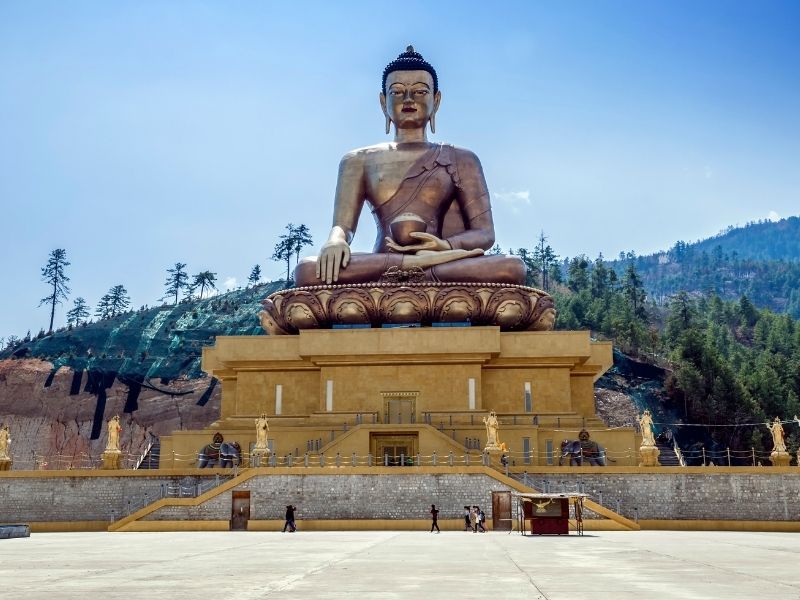
Standing 51.5 meters (169 ft tall), this bronze statue is gilded in gold and houses 125,000 smaller Buddha statues within its structure. That’s right! 125,000 individual Buddha statues inside one massive statue.
After visiting this marvelous monument, we will end our day 2 by praying in the National Memorial Chorten. This white stupa represents traditional Bhutanese Buddhist architecture, offering insight into contemporary spiritual practices in Bhutan.
In fact, prayer wheels surrounding the structures contain thousands of printed mantras.
Day 3: Thimphu Full Day Exploration
Day 3 is all about diving deeper into Thimphu’s cultural and spiritual treasures.
We start the morning with a 1 to 1.5 hour hike to Wangditse Monastery. This trek takes you through pine forests, apple orchards, and traditional farmhouses before reaching the monastery at 2,800 meters elevation.
From the monastery, you’ll enjoy truly mesmerizing views of the Buddha Dordenma statue, Tashichho Dzong, and the entire Thimphu Valley. Pretty spectacular, right?
After descending, we’ll visit the Institute for Zorig Chusum, or School of Arts and Crafts. Here, students learn the thirteen traditional arts, which include carpentry, painting, weaving, and embroidery.
Next, we explore the Textile Museum and Royal Textile Academy, which showcases Bhutan’s world-renowned textile traditions and houses royal robes from each of Bhutan’s five kings.
The afternoon offers time for shopping at the Weekend Market, National Handicrafts Emporium, and various textile shops where you can purchase authentic Bhutanese crafts.
Day 4: Thimphu to Punakha Excursion and Return (75 km each way, 2.5 to 3 hours)
Day four takes you to Punakha, the ancient capital of Bhutan, covering 75 kilometers each way.
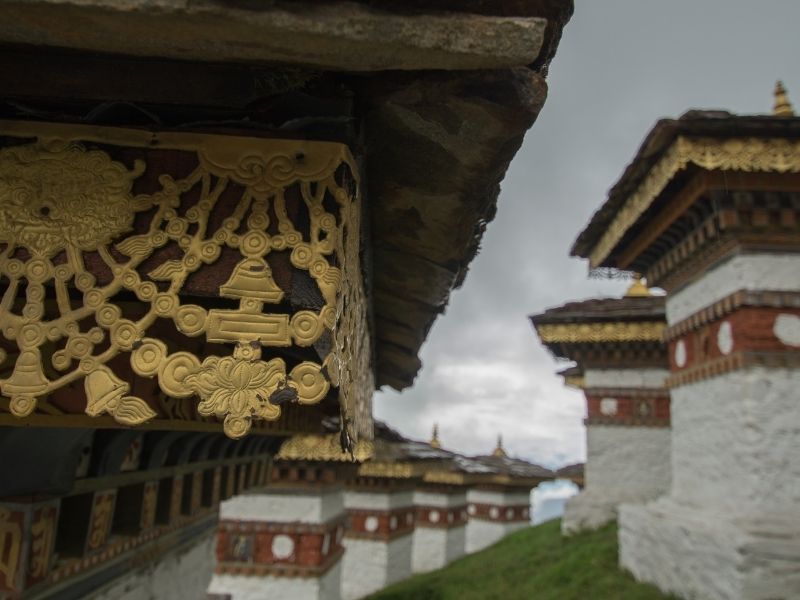
The journey crosses Dochula Pass at 3,100 meters, featuring 108 chortens and spectacular 360-degree Himalayan views. On clear days, you can see Gangkar Puensum, Bhutan’s highest mountain at 7,570 meters.
After reaching Punakha, we’ll visit Punakha Dzong, the “Palace of Great Happiness.” Built between 1637 and 1638, this magnificent structure stands where the Pho Chhu and Mo Chhu rivers converge.
Fun fact: The architect received divine inspiration through a dream vision that guided the construction of this fortress.
Next, we’ll visit Chimi Lhakhang, the Temple of Fertility. Built in 1499 to honor Drukpa Kunley, the Divine Madman, this temple attracts couples worldwide seeking fertility blessings.
The 30-minute walk through rice fields to reach the temple offers scenic views and cultural immersion.
Optional: If you’re feeling adventurous, you can add white water rafting on the Mo Chu River with Class II to III rapids.
After exploring Punakha Valley, we’ll drive back to Thimphu in the evening.
Day 5: Thimphu to Paro, Tiger's Nest Monastery Hike
This is it. The day you’ve been waiting for. The highlight of your entire Bhutan journey.
The morning starts with a 1.5 to 2 hour drive from Thimphu to Paro, giving you time to mentally prepare for the challenging hike ahead.
Tiger’s Nest Monastery, or Paro Taktsang, sits at 3,120 meters on a dramatic cliff face. The hike takes 3 to 4 hours to ascend and 2 hours to descend, with a total round-trip distance of approximately 6.4 kilometers.
The trail starts at 2,600 meters and climbs through pine forests decorated with prayer flags. At the halfway point, you’ll reach Taktsang Cafeteria at 2,900 meters for rest and refreshments.
From there, the trail continues to the viewing platform offering the most iconic Tiger’s Nest photographs. The final approach involves descending stone steps, crossing a bridge over a waterfall, then climbing to the monastery entrance.
Important: At 3,120 meters elevation, oxygen levels drop to 70 percent of sea level. Make sure to stay hydrated, walk slowly, and inform your guide if you feel any altitude sickness symptoms like headaches or dizziness.
The monastery complex consists of four main temples built around the sacred meditation cave where Guru Rinpoche meditated for three years, three months, three weeks, and three days in the 8th century.
Inside, you’ll see ancient Buddhist murals, thangka paintings, Buddha statues, and sacred relics.
However, you need to note that taking photos inside temples is strictly prohibited. Before visiting the temple, you must hand your cameras to a security professional.
And this marks the end of our hike, and we start returning to Paro.
Day 6: Paro to Kathmandu (Flight Back)
Today is the time to bid your farewell to Bhutan. This day also provides you the opportunity to buy souvenirs that you can take back.
Before leaving, you can also visit Kyichu Lhakhang, a temple that dates back to the 7th century.
Your final morning in Paro provides opportunities for last-minute shopping at local markets or visiting Kyichu Lhakhang, one of Bhutan’s oldest temples dating to the 7th century.
The return flight to Kathmandu departs late morning or early afternoon, offering final aerial views of the Himalayas during the 65-minute journey.
By the time you land back in Kathmandu, you’ll carry memories and experiences that will last a lifetime.
Key Attractions During Nepal Bhutan Tour
Tiger’s Nest Monastery: Bhutan’s Crown Jewel
Tiger’s Nest, a sacred monastery that clings to the cliff face 900 meters above Paro Valley at an elevation of around 3120 meters.
Yes, it’s location is fascinating, but what’s more interesting is its legends.
Did you know? Guru Rinpoche flew to this location on the back of a tigress, which was actually his companion, Yeshe Tsogyal.
He then meditated in the Taktsang Senge Samdup cave for three years, three months, three weeks, and three days. This meditation was one of the founding reasons behind the establishment of Buddhism in Bhutan during the 8th century.
Regarding its structure, it has been rebuilt over the centuries. The current structure, built in 1692 by Gyalse Tenzin Rabgye, houses four main temples.
However, the devastating fires in 1951 and 1998 had done some damage to this historic monument. Since then, the monastery has been reconstructed by the Bhutanese royal family using traditional architectural techniques.
When you enter this monastery, you’ll find the Guru mTshan-brgyad Lhakhang, or Temple of the Guru with Eight Names, which refers to Padmasambhava’s Eight Manifestations. During the visit, you’ll be amazed to see how the monastery preserves ancient Buddhist murals, thangka paintings, Buddha statues, and sacred relics left behind by Guru Rinpoche himself.
Rinpung Dzong
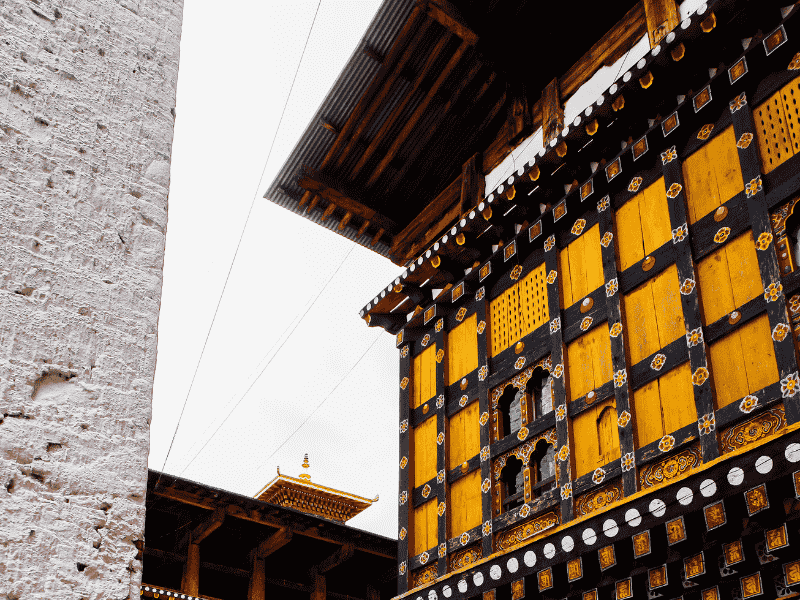
Rinpung Dzong in Paro represents one of Bhutan’s finest examples of dzong architecture. Built in 1646 by Zhabdrung Ngawang Namgyal, this fortress monastery serves dual functions as an administrative center and a monastic residence.
What makes Bhutanese dzongs unique is their construction technique. The entire structure was built without nails or architectural plans, using interlocking timber systems and locally sourced stones. Furthermore, the massive buttressed walls are sloped inward to create both defensive strength and aesthetic elegance.
The five-story central tower, called the Utse, dominates the complex. Inside this tower, you can find fourteen shrines and a chapel that includes the Monks’ Assembly Hall, Temple of Guru’s Eight Manifestations, Chapel of Amitayus, and various protector shrines.
If you want to access the dzong, you have to go through a wooden cantilever bridge roofed with traditional shingles. This approach demonstrates the sophisticated engineering that characterizes Bhutanese architecture.
Fun fact: The dzong survived the massive 1897 earthquake but suffered fire damage in 1906. Reconstruction under Penlop Dawa Penjor used traditional methods and master carpenters from Paro, maintaining the original design.
Punakha Dzong
Punakha Dzong stands as Bhutan’s second oldest and arguably most beautiful dzong. Constructed between 1637 and 1638, this magnificent structure served as Bhutan’s capital until 1955.
The location is strategic and symbolic. It sits where the Pho Chhu, or Father River, and the Mo Chhu, or Mother River, converge. After meeting, these rivers form the Puna Tsang Chu River, which eventually joins the Brahmaputra River in India.
According to prophecy, Guru Rinpoche predicted that “a person named Namgyal will arrive at a hill that looks like an elephant.”
When Zhabdrung Ngawang Namgyal found this elephant-shaped hill, he ordered construction of the dzong.
The six-story construction features three courtyards: the first houses administrative buildings, a large white-washed stupa, and a bodhi tree. Meanwhile, the second contains monks’ living quarters. Lastly, the third holds the burials of Pema Lingpa and Ngawang Namgyal.
In addition to that, Punakha Dzong also houses Bhutan’s most sacred relics of the southern Drukpa Kagyu school, including the Rangjung Kasarpani. As Bhutan’s winter capital, the Je Khenpo and monastic body spend the winter months here due to the warmer climate.
The dzong also gained modern significance as the wedding venue for King Jigme Khesar Namgyel Wangchuck and Queen Jetsun Pema in October 2011.
Buddha Dordenma
Standing 51.5 meters tall, the Buddha Dordenma statue dominates Thimphu’s skyline. This bronze statue, gilded in gold, was built to fulfill an 8th century prophecy about bringing peace and happiness to the world.
But here’s what makes it truly extraordinary. The statue houses 125,000 smaller Buddha statues inside its structure. That’s 100,000 eight-inch Buddha statues and 25,000 twelve-inch Buddha statues, each consecrated and blessed according to Buddhist traditions.
These smaller statues create a massive mandala arrangement reflecting Buddhist cosmology and the interconnectedness of all beings. Visitors can access the interior during certain hours to view these statues and participate in meditation practices.
Located at Kuenselphodrang Nature Park, the site offers panoramic views of Thimphu Valley. The combination of the massive exterior statue and intricate interior arrangement creates a unique spiritual experience.
National Museum: Bhutan’s Cultural Treasury
The National Museum, or Ta Dzong, was originally built in 1656 as a watchtower for Rinpung Dzong. This circular eight-story structure was converted to a museum in 1968.
The museum houses over 3,000 artifacts spanning 1,000 years of Bhutanese history. Collections include ancient thangka paintings, bronze statues, traditional textiles, ceremonial masks, and religious artifacts that document Bhutan’s spiritual and cultural evolution.
You’ll also find some quirky items like a horse horn and an egg laid by a mule, reflecting Bhutan’s rich folklore.
Royal Collections feature textiles and ceremonial items from each of Bhutan’s five kings and their queens, providing insights into royal traditions.
The museum operates from 9:00 AM to 4:00 PM Tuesday through Saturday, and 11:00 AM to 4:00 PM on Sundays.
Understanding Bhutanese Traditions and Culture
The Art of Bhutanese Weaving
Bhutanese weaving, or Thagzo, represents one of the country’s most sophisticated traditional arts. Practiced almost exclusively by women, this craft uses techniques passed down through generations.
Weavers employ three types of looms. Back-strap looms, called pangthag, require weavers to sit on the ground and use body tension to control thread tension. Treadle looms, called thrithag, and card looms serve different textile purposes.
The most prized textile is the kushutara, a formal wrap dress for women that can take up to six months to complete using back-strap loom techniques. Traditional materials include raw silk, cotton, yak wool, sheep wool, and nettle fibers.
Natural dyes derived from local plants create distinctive color palettes. The Trima technique involves coiling weft yarns around warp yarns to create raised motifs, often mistaken for embroidery due to its sophistication.
Regional specializations add diversity. Bura, or raw silk, comes from Trashigang. Sesho, or fine silk, comes from Lhuentse. Yathra, or yak wool textiles, come from Bumthang and western regions.
Queen Jetsun Pema’s kushutara for her 2011 royal wedding was woven at the Gagyel Lhundrup Weaving Centre in Thimphu, demonstrating how traditional techniques continue for contemporary royal ceremonies.
Bhutanese Cuisine: More Than Just Ema Datshi
Ema Datshi, the national dish, combines chilies with yak or cow cheese in a spicy, creamy stew. This dish reflects Bhutanese preferences for bold, spicy flavors and the agricultural heritage of high-altitude farming.
Phaksha Paa features pork cooked with dried red chilies and mountain vegetables. Jasha Maru, or spicy chicken curry, provides another staple showcasing local chilies and traditional cooking methods.
Traditional meals emphasize locally sourced ingredients including red rice, buckwheat, barley, yak meat, and dairy products from high-altitude farming. The cuisine reflects geographic constraints and cultural preferences evolved over centuries in the Himalayan environment.
Practical Information for Your Trip
Visa Requirements and Process
All Nepali citizens require visas to enter Bhutan, which must be obtained through registered Bhutanese tour operators. The visa application process requires booking a complete tour package at least 30 days before travel.
Required documents include a valid passport with at least 6 months remaining validity, two passport-size photographs, and completed visa application forms submitted by your tour operator.
The visa clearance number is issued by Bhutan’s Foreign Ministry and forwarded to airlines and immigration checkpoints. The actual visa stamp is placed in your passport at Paro Airport.
The visa fee is USD 40 for Nepali citizens, payable upon arrival in Bhutan.
Sustainable Development Fee
The Sustainable Development Fee is USD 100 per person per night for international visitors. Reduced rates of 50 dollars apply for children aged 6 to 12, with free entry for children under 5.
This fee supports Bhutan’s free healthcare, education, infrastructure development, and environmental conservation programs. For Indian nationals, the SDF is Nu. 1,200, approximately 15 dollars, per person per night.
The SDF is non-refundable once visa clearance is approved but can be adjusted for trip postponements or rescheduling.
Best Time to Visit Bhutan From Nepal
Spring, from March to May, and Autumn, from September to November, represent the best times for Bhutan travel. These seasons offer clear skies, stable weather, and excellent mountain views ideal for the Tiger’s Nest hike.
October to December provides the driest and brightest weather with minimal rainfall and spectacular Himalayan visibility. March to May features blooming rhododendrons and pleasant temperatures.
Winter, from December to February, brings colder temperatures but crystal-clear views and fewer tourists. Summer, from June to August, involves monsoon conditions with frequent rainfall.
Festival seasons occur from March to May and from September to November, offering opportunities to witness colorful Tshechu celebrations. Paro Tshechu occurs April 8 to 12, 2025, while Thimphu Tshechu is scheduled for October 2 to 4, 2025.
Health and Altitude Considerations In Bhutan
Bhutan’s elevations range from 2,000 to 4,000 plus meters. Paro sits at 2,235 meters, Thimphu at approximately 2,320 meters, and Tiger’s Nest reaches 3,120 meters.
Prevention strategies include gradual ascent, maintaining proper hydration of 1 liter per 1,000 meters of altitude, avoiding alcohol, and recognizing early symptoms.
Symptoms of altitude sickness include headaches, nausea, dizziness, rapid heartbeat, and difficulty sleeping. Anyone can experience altitude sickness regardless of fitness level. If symptoms appear, stop ascending and inform your guide immediately.
Medical facilities are available in Paro and Thimphu with basic healthcare services. Travel insurance covering high-altitude activities and emergency evacuation is strongly recommended.
Popular Add-Ons to Enhance Your Experience
Want to make your Bhutan adventure even more memorable? Here are popular additions you can book with your tour.
Paro Tshechu Festival Experience: Time your visit with Bhutan’s most famous festival occurring April 8 to 12, 2025. Witness sacred masked dances, elaborate costumes, and the unfurling of a giant thangka that blesses all who view it.
White Water Rafting in Punakha: Add thrilling Class II to III rapids on the Mo Chu River. This 10 to 12 kilometer journey takes 60 to 70 minutes with professional guides and complete safety equipment.
Haa Valley Extension: Add 2 extra days to explore the remote Haa Valley, one of Bhutan’s most pristine and least visited regions with stunning landscapes and authentic village experiences.
Traditional Hot Stone Bath: Experience Bhutan’s signature wellness therapy using heated river stones to warm mineral-rich water infused with medicinal herbs. This promotes circulation and relieves muscle tension after trekking.
Bhutanese Cooking Class: Learn to prepare authentic dishes like Ema Datshi and Phaksha Paa with local families. Take home recipes and cooking techniques passed down through generations.
Extended Thimphu Stay: Add an extra night in Thimphu to explore more hiking trails like Phajoding Monastery or visit additional cultural sites and local markets at a relaxed pace.
Luxury Accommodation Upgrade: Upgrade from 3-star to luxury boutique hotels or premium lodges featuring traditional Bhutanese architecture with modern amenities and spectacular views.
Photography Tour: Add professional photography guidance focusing on cultural portraits, landscape shots, and traditional architecture with the best lighting conditions throughout the day.
Traditional Archery Experience: Try Bhutan’s national sport with instruction from local experts. Learn proper techniques and compete in friendly matches with traditional bamboo bows.
Farmhouse Homestay Night: Replace one hotel night with an authentic farmhouse homestay. Participate in daily village activities, enjoy home-cooked meals, and gain insights into rural life in Bhutan.
Final Words On Nepal Bhutan 6 Day Tour
This carefully crafted itinerary maximizes your cultural immersion while maintaining comfortable travel standards. You’ll experience Bhutan’s most iconic attractions including Tiger’s Nest Monastery, ancient dzongs, and vibrant markets.
The tour balances physical activities like hiking with cultural experiences like museum visits and traditional arts exploration. Professional guides ensure your safety while sharing deep cultural knowledge throughout the journey.
Your visit directly supports Bhutan’s sustainable development goals through the Sustainable Development Fee. This investment funds free healthcare, education, environmental conservation, and infrastructure projects that benefit all Bhutanese citizens.
The shared Buddhist heritage between Nepal and Bhutan creates immediate cultural resonance. You’ll recognize familiar spiritual practices while discovering uniquely Bhutanese traditions and customs.
From the spectacular flight over the Himalayas to the challenging Tiger’s Nest hike, from exploring ancient fortresses to shopping for handwoven textiles, this tour provides comprehensive insights into what makes Bhutan the Last Shangri-La.
Book your 6-day Nepal Bhutan tour today and discover why this Himalayan kingdom remains one of the world’s most transformative and carefully preserved destinations.